این نقد هنوز ترجمه نشده است — متن اصلی (English) را نشان میدهیم.
Sometime in 1991, I borrowed a floppy disk from a classmate labeled D-Generation and returned it three days later in silence, without a word. Not because the game was bad — but because I couldn't explain why I'd been sitting in front of it until one in the morning.
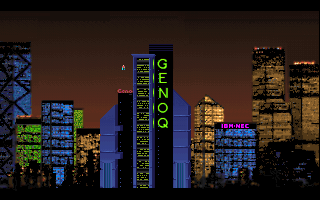
D-Generation is an isometric action game by Mindscape, set in a futuristic building full of mutants and traps. You play as a courier delivering a package — and soon discover that something has gone seriously wrong inside the skyscraper. The game world is divided into rooms connected by corridors, each hiding different obstacles and enemies. No complex narrative structure, no cutscenes — just you, a floor littered with deadly grids, and creatures that don't want to let you pass.
The mechanics rest on moving through isometrically displayed rooms and a simple combat system. The game isn't a fast-paced hack-and-slash — you think more about how to get through a room alive than how many bullets you have left. Traps, buttons, NPCs who give you hints or open doors — everything fits together like a cheap but functional puzzle. The controls in the DOS version feel natural in your hands, though the isometric movement has that annoying quirk that plagued every game in the genre: your character's body sometimes does something you didn't intend.

Graphically, D-Generation didn't look stunning in its release year and looks even less impressive today. The isometric perspective recalls console titles of the era more than PC scene flagships. And that's exactly why a lot of people skipped over it — the box didn't sell it, the screenshot didn't impress. A shame. Under that austere graphics lay room design that was more thoughtful than half its direct competitors. The game aged poorly visually, decently as a game.
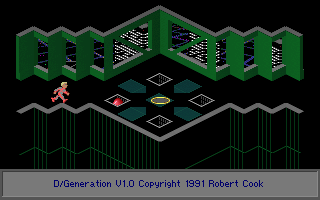
Today D-Generation will appeal to people who like compact action games with a light puzzle twist and don't mind spending a while figuring out how things actually work. It's not a game that will blow you away in the first ten minutes — that was always its problem. But anyone who stuck with it got a solid and distinctive game that was wrongly forgotten.
 old
old


