 old
oldA turn-based strategy game stops the clock every time it is your move. Nothing happens until you allow it, which changes what the game is testing: not reaction speed or how many orders per minute you can issue, but how well you read a map, budget scarce production and guess what the opponent has been doing on the other side of the fog. It is also why these games swallow evenings. Every turn ends with an obvious next step, and the "one more turn" effect is a design outcome rather than an accident.
The strategic end of the collection starts with Sid Meier's Civilization (MicroProse, 1991), written by Sid Meier and Bruce Shelley, which put four thousand years of settlement, research and war on one map and made the technology tree a genre standard. Sid Meier's Colonization (1994) narrowed the same idea to the New World and ends with a war of independence you first have to provoke and then survive. Civilization II followed in 1996, and Alpha Centauri moved the formula to another planet, with ideological factions, terraforming and units assembled from parts. Advanced Civilization comes from a different lineage: it is a computer version of the Avalon Hill board game about trade in the ancient Mediterranean.
Simtex built the other pillar. Master of Orion (1993) is the compact 4X: colonise stars, research a tech tree that never hands you everything, design ships from the components you have unlocked, and negotiate with races that remember what you did to them. Master of Orion II - Battle at Antares expanded ship design and colony management, and Master of Magic (1994) transplanted the structure into fantasy, splitting the world into two linked planes and letting you build a wizard out of spellbooks and traits. Heroes of Might and Magic from New World Computing sits nearby, dividing play between an exploration map and a separate battlefield screen.
The tactical branch works at the scale of individual soldiers. UFO: Enemy Unknown, designed by Julian Gollop at Mythos Games, joins a strategic layer of bases, funding and research to turn-based squad missions where every action costs time units and losing a veteran team still hurts hours later. Jagged Alliance hires mercenaries with personalities and contracts, Panzer General from SSI runs a hex-map campaign in which a surviving core of units carries its experience from scenario to scenario, a structure reused by Allied General and Fantasy General, and Battle Isle from Blue Byte, Warlords from SSG and Lords of the Realm take the idea into machine combat, fantasy conquest and medieval county management.
Titles marked as playable start directly in the browser through an emulator, with no installation and no registration. Sessions in this genre are long and the interfaces were built around a keyboard as much as a mouse, so a device with a physical keyboard is worth using.
 ▶Sid Meier's Civilization1991MS-DOS / PCSid Meier's Civilization for Windows▶Sid Meier's Civilization for Windows1993MS-DOS / PC


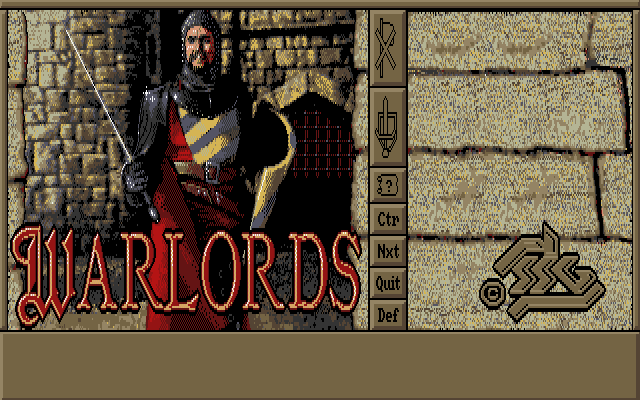 ▶Warlords1990MS-DOS / PC


