Bài đánh giá này chưa được dịch — chúng tôi hiển thị bản gốc (English).
I'm sitting in front of my monitor, it's 1992 outside, and for the first time I see a racing car actually behave realistically when you oversteer. Not like in Pole Position, not like those arcades where you just had to mash the right arrow. Here, I managed to spin out backward on Silverstone before I even had a chance to downshift.

Formula 1 Grand Prix by MicroProse is a racing simulator for MS-DOS from 1992, based on the circuits and rules of Formula 1 at that time. It's not an arcade game. It's an attempt to simulate what happens when you put a real engine in a car and drive it at a hundred toward a wall. A surprisingly convincing attempt for its time.
The game offers two basic modes — a quick race straight onto the track, or a full racing weekend with practice sessions, qualifying, and the race itself. You set the length of each session yourself, from five minutes to two hours of practice, and the race can be run in full length or shortened to five percent. The physics breathes for its era: the car reacts to oversteer, understeer, tire wear. Vehicle setup before the race isn't just decoration here. Anyone who thought they could blast through a few laps without thinking was in for an unpleasant surprise. I was surprised three times in the first half hour.

What set this game apart from the competition in 1992 was the sense that you were dealing with a genuine simulation, not a moving wallpaper. The cockpit view was functional, the terrain around the circuits didn't need an extra polygon back then, and yet it worked. Today, the graphics obviously show their age without mercy — low resolution, barren environments, AI opponents driving on rails like model train cars. But the physics model deserves respect even now, because the basic principles of how the car behaves are still legible and surprisingly educational.

Who would Formula 1 Grand Prix suit today? Those who want to know where the interest in Formula 1 simulators came from before Codemasters' F1 arrived. And players who like to test whether their patience with stories about "real racing" is justified. Running it today in a browser via DOSBox emulation is something anyone can manage — and the first engine start on the starting straight reliably wipes away forty years.
 old
 NEED FOR SPEED: UNDERGROUND 2 (2004) VINTAGE REPRINT BlackXem trên AliExpress »
 N-Need for Speed Poster HD Waterproof PP Self-AdhesiveXem trên AliExpress »


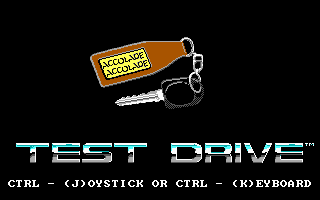 ▶Test Drive1987MS-DOS / PC


 ▶Micro Machines1994MS-DOS / PC


 ▶Street Rod 2 - The Next Generation1991MS-DOS / PC

 ▶F11993Sega Mega Drive


 ▶Turbo Outrun1989Sega Mega Drive


 ▶Road Rash II1993Sega Mega Drive


