Summer of 1989, sweltering heat, and I'm sitting at my dad's computer trying to figure out how to properly spin a lasso using the keyboard. Buffalo Bills Rodeo Games isn't a game people reminisce about in grand fashion these days, but back then — when every other title was either a tank simulator or a Tetris clone — five minutes at the rodeo was a pretty welcome refresher.

MicroValue released this title in 1989 for MS-DOS and the name says it all. You're part of a traveling rodeo show inspired by Wild West legend Buffalo Bill, you compose your own program from several events, and you try to convince the audience that you can pull off all of it. The selection of events includes classics like sharpshooting tricks, knife throwing, or lasso work — disciplines that in the nineties reliably guaranteed the game would be controlled by frantic keyboard mashing or joystick flailing.
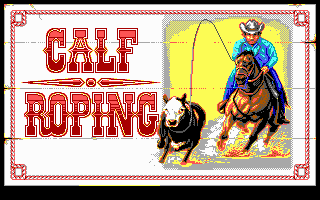
And that's exactly how it plays. Each event is basically a minigame with simple rules and a steep ramp into frustration. The controls have that specific stiffness that was common in 1989 and nobody really minded back then — you either learned it or gave up. Roping calves is probably the most interesting bit because it requires some feel for timing. The rest is mostly whether your nerves hold out.
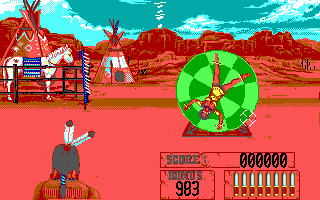
What Rodeo Games brought was an attempt to compile Western themes into one package, which wasn't entirely obvious at the end of the eighties. It's not some technical revolution — the graphics are modest, the sound matches the PC Speaker era — but the genre variety felt fresh. Today the game has aged in a way that's typical for this type of title: decent enough as a curiosity, worse as a gaming experience. The minichallenges are brief and repetition is their only depth.
Today it's mainly played by those who want to feel what a DOS gaming afternoon looked like without any grand ambitions — pure, somewhat primitive fun for twenty minutes. In a browser via emulators like DOSBox Online, that's precisely the right length. You wouldn't want to stick with it any longer anyway, and that's not a criticism — it's just an honest description of what the game is.
 old
 Super Mario T-shirt Cotton Tee EST 1985 Vintage Circleดูบน AliExpress »
 Talking Flower - Nintendo Fun Desktop Voice Ornament 100%ดูบน AliExpress »


 ▶NHL '941993MS-DOS / PC

 ▶The Manager1991MS-DOS / PC


 ▶European Club Soccer1993Sega Mega Drive


 ▶PC Basket 3.01995MS-DOS / PC