The checklist alone could break you. Before A320 Airbus from Thalion Software even lets you push back from the gate, it hands you a cockpit so dense with switches, dials and annunciator panels that your first instinct is to close the program and go play something with a spaceship and a single fire button. That instinct is understandable. It is also wrong.
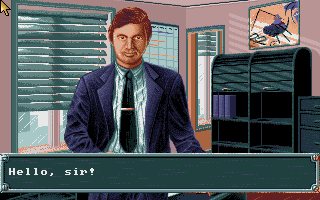
Released in 1993 for MS-DOS, A320 Airbus puts you in the left seat of an Airbus A320 on scheduled commercial routes. No dogfights, no medals, no explosions unless you cause one yourself. The goal is mundane in the best possible sense: depart, navigate, descend, land, do it again. Thalion aimed squarely at the serious end of the market, and the cockpit modelling reflected that ambition. This was not a game you booted up between homework and dinner.
The simulation covers the full flight envelope, from pre-flight setup through cruise to ILS approaches and manual landings. The flight model leans toward the study-sim side of the dial. The A320's fly-by-wire behaviour is represented in a way that felt genuinely exotic in 1993, when most PC pilots were still yanking on the yokes of Cessnas and Boeings in Microsoft Flight Simulator. Getting the autoflight systems to do what you actually want requires reading the manual, not skimming it. That translated manual sitting next to my keyboard had dog-eared corners on half its pages within a week.
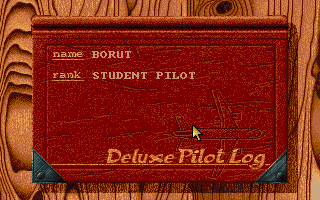
What the game got right was atmosphere. The cockpit graphics were sharp for the era, the sense of sitting inside a real airliner tube was convincing, and the procedural weight of it all — tuning navaids, setting up the FMS, managing the approach — gave every landing a quiet drama that combat sims never quite delivered. What zestálo špatně — what aged badly — is the documentation dependency. Without the manual you are functionally blind. The game explains almost nothing on screen, which in 1993 was considered depth and in 2024 reads as friction.
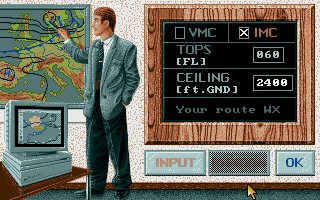
A320 Airbus is a relic for a specific type of person: someone who finds satisfaction in doing a procedural thing correctly, who does not need explosions to stay engaged, and who remembers that flight simulation before YouTube tutorials meant genuine trial and error measured in botched approaches. In a browser it remains playable, though I would strongly recommend finding a scanned copy of the manual before you touch the throttle. Without it you are just sitting in an expensive chair, watching warning lights you cannot name. With it, there is still something here worth your time — a 1993 airliner sim that took its subject seriously when almost nothing else did.
 old



 ▶Pinball Fantasies1992MS-DOS / PC

 ▶Windows 95 in the BrowserMS-DOS / PC


 ▶Free Croatia (DOS game)MS-DOS / PC
 ▶NHL '941993MS-DOS / PC
