Esta análise ainda não foi traduzida — mostramos o original (English).
An asteroid is hurtling straight at you and you've got a second to decide — maneuver or fire. Space Conflict from 1993 is a straightforward arcade shooter on DOS where you pilot a spaceship and hunt enemy fighters and asteroids in endless darkness. Graphics like paper cutouts on a black background, sounds like someone stomping on sheet metal — and yet it works.
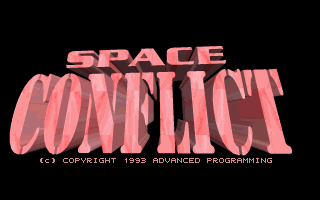
The game gives you direction control, acceleration, and firepower. Nothing more you need. You fly in the center of the screen, enemies appear and vanish at the edges, asteroids spin and break into chunks. Nothing complicated — reactive gameplay where reflexes matter more than strategy. Waves alternate with different target combinations, difficulty ramps up gradually. When you die, there's a certain appeal to starting over. Just a little bit.
The mechanics work as intended. Controls are precise, bullets fly straight, enemies behave predictably. What's missing is pretty much anything that would make you want to keep playing long-term. No upgrades, no bonuses, no story or progressive goal. It's pure attrition — shoot, clear objects, wait for the next wave. After twenty minutes you know what's coming. After fifty minutes you're sick of it.
Space Conflict represents an era when arcade was a respectable genre. Games like Asteroids or Lunar Lander were innovative and hypnotic. But what worked in arcade halls in the nineties with coins feeding the machine quickly loses blood sitting at home in front of a monitor without your friends. The graphics aren't anything to draw you back. The sound is so rudimentary it goes in one ear and out the other.
Today? When you want to verify what it felt like — pure DOS gameplay without the fluff. When you're drawn to the most primitive forms of play — nothing fancy, just you and the computer. You'll find it in old archives and run it in an emulator or DOSBox. Ten minutes is pleasant plain water with no sugar. Don't expect more.
 old
old


 ▶Ultimate Mortal Kombat 31996Super Nintendo


