Esta análise ainda não foi traduzida — mostramos o original (English).
Year 1995, Sierra On-Line. A name that meant guarantee back then. But instead of another adventure opus, came a title that hid behind an unassuming name and tried to embrace the Middle Ages in a way I wasn't prepared for.
Conqueror: A.D. 1086 drops you into England shortly after the Norman Conquest. You play a feudal lord trying to build a power base, acquire land, arrange the right marriages, and survive court intrigue. On paper, it's a mix of strategy, domain management, and roleplay — the kind of hybrid that Sierra experimented with in various forms and sometimes pulled off brilliantly.
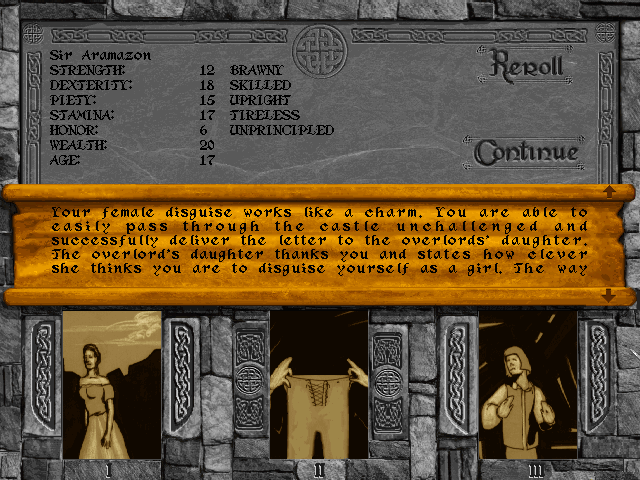
The character creation system is honest, perhaps the best I'd seen in the genre back then. You assign attributes, choose your background, and the resulting character actually manifests itself in interactions. Voice acting — at a time when most games were still silent — managed to create an atmosphere that seeped from the monitor. Tournaments with court ladies, conspiracies at the royal court, castle sieges from a subjective perspective through simple animations — it all built an immersion I remembered. Feudal relationships and dynastic politics felt alive. When you gained a title and with it influence, it carried weight.
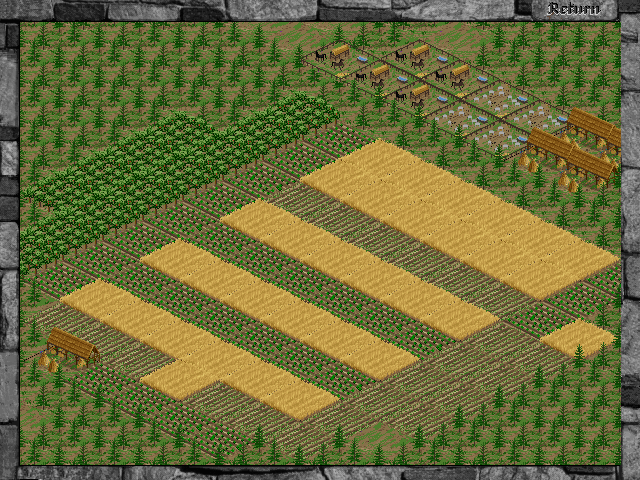
And then came the flip side. Strategic elements — territory management, military campaigns, economy — are handled so shallowly that they feel more like window dressing than actual mechanics. The game repeats itself. After a few hours, you realize the loop is shorter than it appeared. The exception is the court ladies and their storylines, which have surprising depth and kept me at the screen longer than the campaigns themselves. The flow of time is shaky — events follow one another in ways that sometimes don't make logical sense and undermine the immersion the game otherwise worked hard to build.
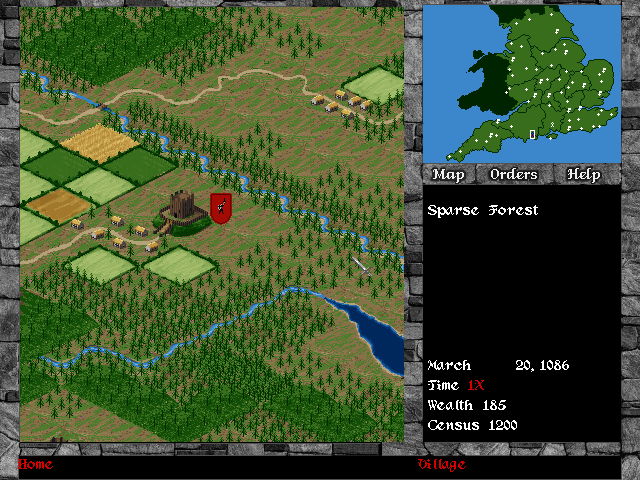
Today, Conqueror: A.D. 1086 is interesting primarily as evidence of ambitions that exceeded execution capabilities. Sierra knew how to create atmosphere back then, but the genre hybrid didn't quite hold together for them. It'll suit you if you enjoy medieval court politics more than tactical battles and if you're willing to overlook mechanical repetition. Players coming from Civilization or Master of Magic expecting a strategic challenge will be disappointed. Everyone else gets a solid historical curiosity with its heart in the right place.
 old
old


 ▶North & South1990MS-DOS / PC


 ▶Teenage Queen1988MS-DOS / PC

 ▶Warlords1990MS-DOS / PC


 ▶Chess1998Sega Mega Drive


