Denne anmeldelsen er ikke oversatt ennå — vi viser originalen (English).
ORIGIN Systems in eighty-eight wasn't just Ultima. It was also Chris Roberts — yes, the future father of Wing Commander — who decided to make an action RPG that would fit in memory and wouldn't take the whole weekend to read the manual for.
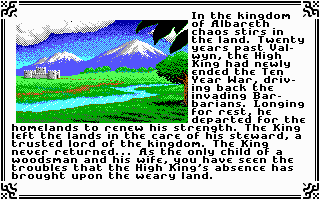
Times of Lore is a fantasy RPG set in a crumbling kingdom, where the player takes on the role of a hero tasked with restoring order. The world is divided into tiles you traverse in real time, fighting monsters and completing quests for various characters scattered across the map. The plot isn't exactly Dostoevsky, but for 1988 it's enough — it gives you reason to venture out and keep going.
The biggest difference from Ultima at the time is the pace. No turns, no lengthy battles on a separate screen. You attack right on the map, while moving, and the game rewards or punishes you instantly. Mouse or joystick control was surprisingly smooth on the DOS version, keyboard worked too, but you could feel the game wanted to be comfortable — not intimidating. Inventory, maps, dialogs: everything accessible without flipping through four screens. That was luxury in eighty-eight, even if nobody called it that back then.
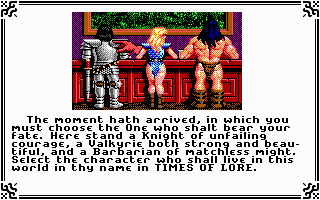
What still works today is the atmosphere. The SoundBlaster music wasn't a chart-topper, but the world convinced you graphically — colorful tiles, distinguishable areas, a sense of real travel across a continent. What's visibly aged, meanwhile, is depth. The RPG component is thinner than memory suggests: character progression exists, but doesn't deliver that sense of sustained building we've come to expect from the games Times of Lore inspired. The game is shorter and more straightforward than it appears. For some, liberating; for others, mildly hollow.
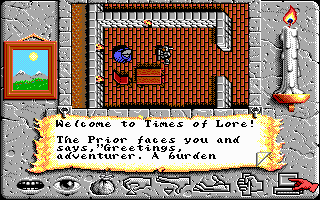
Today Times of Lore suits those who want a window into the era when ORIGIN was testing the genre's boundaries. It's not Ultima VI, it's not Zelda either — it's something in between, made with flair and without pretension. Fire it up in your browser in two minutes and in an hour or two you'll understand exactly why veterans remember it and why younger players put it down quick. Both reactions are valid.
 old
old


 ▶Dungeon Master1989MS-DOS / PC


 ▶Light Crusader1995Sega Mega Drive


 ▶Doraemon: Giga Zombie no Gyakushuu1990Nintendo NES
 ▶Wizardry 7: Crusaders of the Dark Savant1992MS-DOS / PC