Denne anmeldelsen er ikke oversatt ennå — vi viser originalen (English).
India 1991 — not the real one, but the one in my room, where I was trying to make sense of a continental map while frantically flipping through an English manual. Champion of the Raj by PSS was exactly that kind of game: challenging, a bit inaccessible, but beneath the apparent chaos lay a solid strategic foundation.
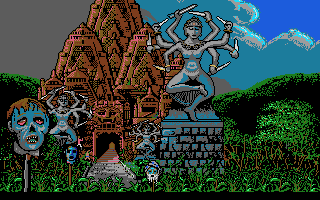
Set in 19th-century colonial India, the game drops you into a power vacuum where several factions compete for influence — the British East India Company, local princes, Sikhs, Marathas, and others. As if that weren't enough, lurking in the shadows is a Hindu cult trying to fuel mutual conflict between all factions and plunge the entire subcontinent into permanent warfare. You pick one side and try to emerge from this mess as the victor.
Mechanically, it's a turn-based strategy with diplomatic and military elements. You command armies, forge alliances, trade, and manage your territory. The controls aren't bad for the era, but the interface is quintessentially early-90s — get used to clicking exactly where the game expects you to, not where it logically seems right. Anyone who played Colonization or older Civs back then will have some frame of reference. Anyone else will stare at the screen for the first hour like someone just handed them a map of India without a legend.
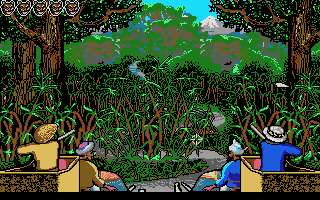
PSS wasn't a major player, and Champion of the Raj never joined the pantheon of strategy games alongside Civilization or Master of Orion. It remained an intriguing piece on the genre's periphery — appreciated more in Britain, where colonial themes resonated stronger than in Central European attics. Today the game has aged exactly as you'd expect: graphics are functional and nothing more, the AI sometimes creates situations that look like deliberate sabotage, and the pace can be brutally slow for modern players. That said, a historical setting in India is still rare in the genre and keeps the game somewhat interesting just for where it takes place.
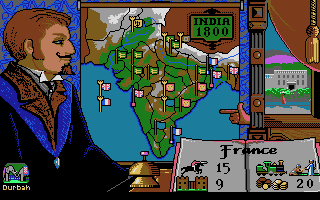
Today, probably only a handful will play it: those who remember it, historical strategy fans looking for something beyond Europe and North America, and collectors of oddball gems from the golden age of DOS. If you fall into one of these groups, it's worth an hour of experimentation. Expect a steep learning curve, no hand-holding, and an interface that'll test you before the rival factions do.
 old
old


 ▶Teenage Queen1988MS-DOS / PC
 ▶North & South1990MS-DOS / PC


 ▶Sid Meier's Civilization1991MS-DOS / PC


