Deze recensie is nog niet vertaald — we tonen het origineel (English).
You wake up in some godforsaken wasteland, and immediately you're getting shot at. Doc the Destroyer doesn't waste time on preamble—it throws you straight into the mess with nothing but a gun and the vague understanding that survival is your job. Melbourne House, the Australian outfit behind this 1987 Commodore 64 effort, clearly believed in the sink-or-swim school of game design.

The premise is stripped down to its bones: you're a wanderer in a post-apocalyptic wasteland, and your goal is to move through hostile territory, shoot things that shoot back, and occasionally talk to people who might help or hinder your progress. It's part action game, part RPG conversation system, part adventure—a hybrid that sounds more ambitious than it actually plays. You navigate screen by screen, manage inventory, pick up weapons and supplies, and occasionally trigger dialogue trees that determine whether a character becomes an ally or another corpse on the sand.
The actual gunplay is stiff and deliberate, which means you can't just spray bullets and hope. You need to position yourself, time your shots, and watch your ammunition count—waste rounds and you're finished. This forces a kind of tactical patience on you, but it also means combat feels clunky rather than satisfying. The C64's color palette of browns and grays doesn't help matters; everything bleeds into everything else, and you're often squinting to figure out what's terrain and what's a threat.

Doc the Destroyer exists in that weird space between arcade action and narrative-driven adventure, but it doesn't quite nail either one. The action lacks the snappy feedback of pure shoot-em-ups, while the adventure elements are too thin to carry real weight. What you're left with is a competent but unremarkable mid-tier title—the kind of game that caught attention in Australia but barely registered elsewhere. For modern players, it's a curiosity piece: proof that someone in Melbourne was thinking beyond simple platformers in the mid-eighties, even if the execution was more functional than inspired.

Today, Doc the Destroyer works best as a time capsule. It's not broken, it's not unplayable, but it moves at a pace that feels alien to modern gaming. If you want to see what the Australian game industry was doing when most people were looking at Japan and America, it's worth a session in your browser. Just don't expect it to blow your mind—expect it to remind you that not every experiment from the era was a gem.
 old

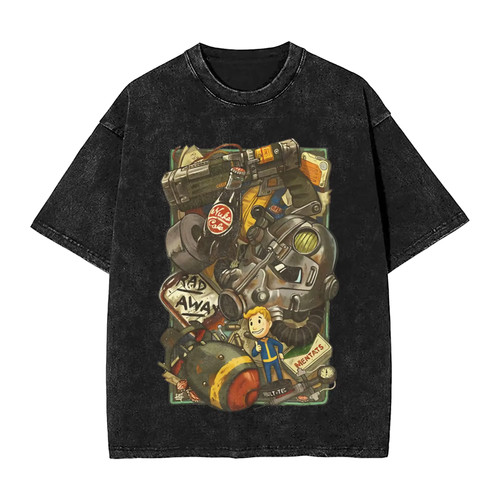 Fallout Vault Tec T Shirt Washed Black Graphic Tee CottonaffiliatelinkBekijk op eBay »
 SDCC 2026 Nuka Cola 3" Figure Syndicate CollectablesaffiliatelinkBekijk op eBay »
 Fallout Jones Soda Nuka Cola Cranberry, Quartz, & QuantumaffiliatelinkBekijk op eBay »
 Complete Fallout Novelty Set Of FouraffiliatelinkBekijk op eBay »
 Fallout Shirt Enclave WastelandaffiliatelinkBekijk op eBay »
 Heads Fallout Vault Bobblehead Perception 2018affiliatelinkBekijk op eBay »


