Ulasan ini belum diterjemahkan — kami memaparkan versi asal (English).
It was sometime in the mid-nineties when I first realized that a stock market simulator could be more thrilling than just about any shooter. Not because it flashed and moved around, but because that red column in my portfolio was my red column.

Rags to Riches from 1993 by Interplay is exactly what the title promises — a financial market simulator where you start with a family inheritance, open your own office, and try to turn modest capital into an empire. The goal is simple: make as much as possible in as little time as possible. The game offers two scenarios — one set during the Wall Street crash of 1929 and another in the then-present day. This was at least an interesting idea for its time, because the historical scenario gave players context and awareness that there are crashes in this market too.
Gameplay rests on the basic logic of the stock market — you buy, watch the rates, sell, try to read market movements before they sweep you away. The controls were standard keyboard-based menus, as was the custom back then, and the interface doesn't surprise with any friendliness. Tables, numbers, columns. Anyone expecting live graphs and animations was in the wrong decade. On the other hand — anyone who fired this up in 1993 knew what they were getting into. The simulation itself isn't deep by today's standards, but for the time it was a solid approximation of market logic without the game spoon-feeding you.
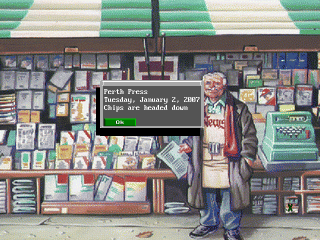
What I remember about Rags to Riches — or rather what I appreciate about it in hindsight — is precisely that historical scenario. Playing the 1929 crash as a player who knows what's coming but has to deal with it in real-time simulation, that had its atmosphere. Or you could ignore history and lose everything anyway, just with a different feeling. As an educational tool it made sense. As pure entertainment — that was a more selective audience.
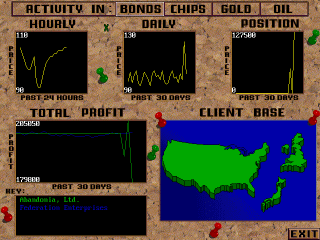
Today Rags to Riches appeals mainly to nostalgics and those interested in the history of game simulators. It's a snapshot of a time when Interplay was still trying different genres and wasn't afraid to tackle a subject that most developers ignored. You can handle it in a browser via DOSBox emulation without installation or hassle — and in half an hour you'll know for sure whether this form of entertainment appeals to you, or whether you'll switch to something where at least you get to shoot.
 old
old


 ▶Pinball Fantasies1992MS-DOS / PC


