Ez az ismertető még nincs lefordítva — az eredetit mutatjuk (English).
You pick England, select your formation, and watch a tiny player sprite shuffle across a pitch that looks like someone drew it on graph paper during a boring meeting. Welcome to 2006 FIFA World Cup on Game Boy Advance—EA's attempt to cram the world's biggest football tournament into a cartridge no thicker than a piece of toast.

This is straightforward arcade football stripped to its skeleton. You've got your international teams, tournament modes, and a handful of playgrounds to bash the ball around. The GBA hardware wasn't exactly screaming for photorealism, so EA went with a top-down perspective and a visual style that makes sense for the hardware—clean, readable, and honest about its limitations. You pick a team, grind through group stages and knockouts, and try not to laugh when your striker somehow scores from the corner flag.
The actual playing feels lightweight and snappy. A button for shoot, another for pass, maybe some direction modifiers. There's no complex tactics here—it's about timing your passes and recognizing when to sprint forward before the goalkeeper's AI realizes you're coming. The ball physics are serviceable, neither annoying nor revelatory. You can string together decent moves, and scoring feels earned rather than random. What drags it down is the repetition. Every match plays almost identically. There's no weight to the ball, no sense that a through pass actually means something tactically. It's football reduced to button presses in pleasant rhythm, which works fine for a bus ride but doesn't grip you.

By 2006, handheld football had already found its groove elsewhere—the competition was fiercer, the platforms stronger. This game doesn't embarrass itself, but it doesn't demand your attention either. It's the sports game equivalent of a serviceable hotel room: functional, forgettable, and you'll move on without regret.

If you want portable World Cup nostalgia and don't mind something lightweight and turn-based in pace, the GBA version exists in that sweet spot where it's not broken enough to frustrate you but never charming enough to pull you back. It's a perfectly fine distraction that time has rendered entirely irrelevant—replaced by dozens of better handheld football games that came after, on better hardware, with more ambition.
 old

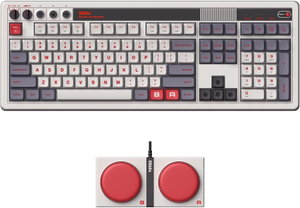 8BitDo Retro Mechanical Keyboard (N Edition) with Integrated Numpad + 42 490 FtMegnézem az Alzán »


 ▶Sensible World of Soccer 2016/20172016MS-DOS / PC


 ▶European Club Soccer1993Sega Mega Drive


 ▶The Manager1991MS-DOS / PC


