Ova recenzija još nije prevedena — prikazujemo izvornik (English).
Summer of 1990, scorching heat, vacation time, and there I was sitting at the monitor instead of heading to an actual court. Great Courts by Blue Byte kept me entertained more than an inflatable ball in the garden—and that says something.
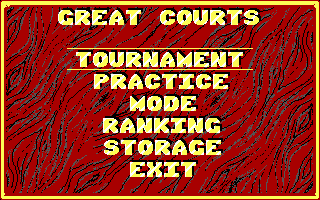
It's a tennis game that throws you into the world of tournaments—and not just any tournaments. Four Grand Slams, hard court, clay, grass, indoor. Each surface behaved differently, at least in theory. The goal was simple: fight your way through tournaments, defeat opponents, and feel like Becker or Edberg, who ruled the world rankings back then.
The controls were straightforward, which wasn't a given in 1990. Movement on the court, timing your shot, choosing direction—basic, but functional. The game was played from a side perspective, which was pretty much the standard for tennis on PC back then. The biggest strength lay in forcing you to think about timing. Player stamina wasn't just a number in a table—you felt it when your legs started rooting to the floor by the end of a match. The AI of your opponents wasn't any genius, but sufficient for solo play.
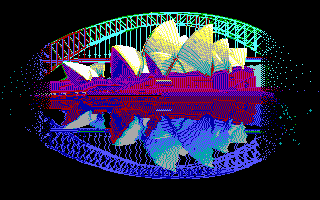
What Great Courts brought was important in the context of the time. Blue Byte wasn't a big name back then, but this game showed that sports simulations on PC could have some substance. The graphics looked decent on the hardware available at the time, the EGA palette held up. Today, of course, you can see the ravages of time—animations are choppy, sounds from the PC speaker or Sound Blaster are more of a toothache memory than Wimbledon. But what endures is that sense of direct combat the game managed to convey even with limited resources.
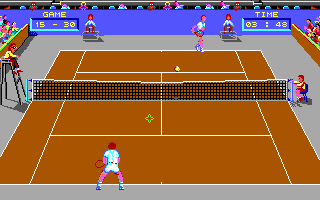
These days, Great Courts will appeal mainly to those wanting to remind themselves what sports looked like on PC before polygons and commentators started screaming in your ears. It's an archive piece, not a challenge for the modern player. You'll get through it in an afternoon via DOSBox in your browser, and then you'll realize how easily we used to be content with so little.
 old
old


 ▶Winter Games1986MS-DOS / PC
 ▶Championship Manager Italia1993MS-DOS / PC


 ▶NBA Action '941994Sega Mega Drive

 ▶European Club Soccer1993Sega Mega Drive
 ▶Total Football1995Sega Mega Drive

 ▶Lakers vs Celtics and the NBA Playoffs1989MS-DOS / PC