Ce test n’est pas encore traduit — nous affichons la version originale (English).
It's 1994, the monitor sticks out of the desk like an altar, and I'm waiting for a game to load that promises knights, monsters, and royal humor. The Horde from Toys for Bob wasn't exactly a typical affair back then — and today, thirty years later, it's still hard to pigeonhole.
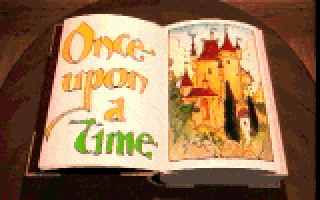
You take control of a young servant named Chauncey, who unexpectedly finds favor with his king and receives a plot of land and the legendary sword Grimthwacker as his reward. Your mission is to defend your allocated territory from hordes of monsters pouring in from the map's edges, intent on devouring everything living — literally. The villagers, their fields, livestock. Lose too much, and you lose your resources; without resources, the game ends.
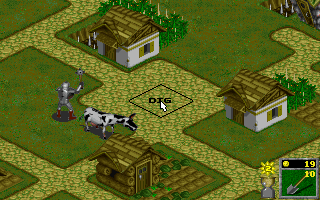
The mechanics are interesting in exactly the way things that don't fit neatly anywhere tend to be. Each turn has two phases: building and combat. In the building phase, you construct your village — adding houses, farms, fortifications. Then you switch to an action view and personally hack away at waves of monsters until the timer counts down the end of the wave. The combination of resource management and direct action felt fresh at the time. Today it's a bit like eating soup with a fork — it works, but you always feel like you're missing something from both sides.
What The Horde pulled off better than most productions of its era was humor. The opening live-action film sequence — yes, they did that back then — had real gag timing and an unmistakable British undertone. The game didn't take itself too seriously, and you could feel it in the spell names, the king's commentary, and the overall style. Graphically, it was average for its time; the music served its purpose in the background adequately. What aged worst was precisely that action slashing — it's repetitive, and after a few rounds it stops being fun sooner than it should.
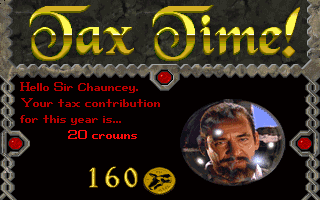
Today, it'll mostly be played by those looking for precisely this proto form of tower defense and real-time strategy before those genres even had names. It's a historical artifact with decent humor and an idea that was a step ahead — just half a step ahead of its own execution. Grimthwacker is ready. The villagers, not always.
 old

 T-Shirt Black Library Weekender Workshop Warhammer 40KVoir sur eBay »


 ▶Teenage Queen1988MS-DOS / PC


 ▶North & South1990MS-DOS / PC


 ▶Sid Meier's Civilization1991MS-DOS / PC


