این نقد هنوز ترجمه نشده است — متن اصلی (English) را نشان میدهیم.
When you pick up the joystick and a world saturated with Norse mythology unfolds on your computer screen, you know this won't be an ordinary adventure. Valhalla from 1993 throws you into the realm of Nordic mythology, where every decision carries weight and every step can end in death.

It's an RPG with adventure elements that are hard to fit into a single box. You play a group of warriors with the goal of reaching the famous Valhalla — the seat of the gods in Norse mythology. The game takes place against the backdrop of stylized landscapes, where you encounter mystical beings, solve story situations, and occasionally can't avoid combat. It's not simple dungeoncrawling — it's more about atmosphere and narrative, where the surroundings change based on how your blocky-drawn characters are faring.
The mechanics are simple, almost crude. You move across the map, communicate with characters through dialogue, and when you encounter something, the game gives you time to decide what to do. The graphics were acceptable for the time, but today they look like something between MS-Pacman and early Ultima. The cohesion is fixed — you won't even think about putting the joystick down. The problem is that the game sometimes relies on information it never actually told you before. The simple controls sometimes become a stumbling block when you have to guess what the game wants from you.
We remember Valhalla today more as a curiosity that gently held onto something that could have been an interesting idea — an RPG built more on decision-making and story than numbers and levels. While the big games of that era emphasized graphics and scope, this was something quieter. You'll discover that its approach wasn't a misstep — it was just a step in a different direction that didn't catch on.

You can play it today easily enough in DOSBox if you're drawn to archaic RPG atmosphere without grand ambitions. It's not a game for everyone — especially not for those expecting hand-holding and loud sounds. But if you're interested in artifacts from an era when computers were brewing ideas just as tantalizing as today, Valhalla is worth a try. It's like flipping through an old photo album — not because the photos are the best, but because they tell you how things were.
 old


 ▶Dungeon Master1989MS-DOS / PC


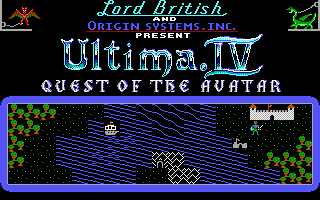 ▶Ultima IV - Quest of the Avatar1985MS-DOS / PC


 ▶Doraemon: Giga Zombie no Gyakushuu1990Nintendo NES
 ▶Light Crusader1995Sega Mega Drive
 ▶Phantasy Star IV1993Sega Mega Drive
 ▶Heroes of Jin Yong (金庸群侠传)1996MS-DOS / PC


 ▶Fallout 1 Prototype1997MS-DOS / PC
