این نقد هنوز ترجمه نشده است — متن اصلی (English) را نشان میدهیم.
Mars. Just that word on the cover of a shareware diskette was enough for me to launch it in 1991 before I even read what the game was actually about. Monuments of Mars was a name that promised adventure — and a CGA platform that promised eye strain.
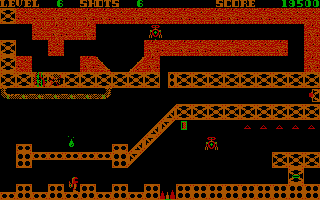
It's a platformer by Todd Replogle published through Apogee Software, which was perfecting this type of shareware series at the time. The game takes place on the red planet, where an explorer searches for a way out of underground complexes full of traps and enemies. Nothing groundbreaking about the story, but in 1991 it was enough that asteroids fell and everything blinked red.
The game consists of four episodes, each with twenty levels. The first episode was released as free shareware, the rest you had to buy. This distribution method taught Apogee the ropes long before anyone called it free-to-play. It plays like a classic side-scrolling platformer — jumping, shooting, avoiding traps. The controls are stiff in exactly the way DOS-era games were, when the game forgave your mistakes about as readily as your dad forgave a forgotten homework assignment.
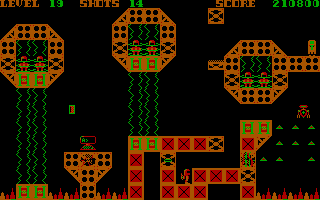
What keeps Monuments of Mars alive in memory is primarily its visual style. The CGA palette in blue-and-white mode gives the game a cold, technical feel that surprisingly suits Mars better than many later, more colorful attempts at sci-fi aesthetics. Level design is solid — twenty levels per episode sounds like a lot, but it's no filler; each level adds a new trap or enemy placement that'll demand at least one pointless death. Apogee knew back then how to keep players engaged without a single tutorial.
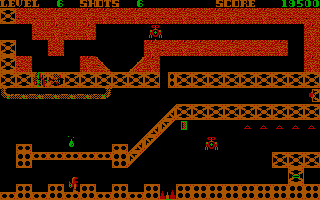
Today, the game suits anyone who wants a solid quarter-hour of pure retro reflexes without installation, without accounts, without a twenty-minute opening video. It runs flawlessly in a browser through DOSBox emulators. It's not a title you'd cite as the pinnacle of the genre, but it's honest work from an era when shareware meant: we'll give you enough to make you want more. And back then, that worked.
 old
old


 ▶Doom1993MS-DOS / PC


 ▶Contra1988MS-DOS / PC

