این نقد هنوز ترجمه نشده است — متن اصلی (English) را نشان میدهیم.
Summer of 1999, sweltering heat outside, and I'm sitting in front of a monitor with my Sound Blaster cranked to the max. Catchy jazz-funk music pours from the speakers, and a green rabbit with an assault rifle dashes across the screen. That was Jazz Jackrabbit 2 — and The Secret Files was its data disk finale, a package of new episodes for those who couldn't get enough.
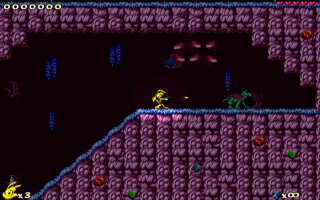
It's a 2D action platformer from Epic MegaGames set in a comic book-flavored sci-fi world. You play as Jazz, an anthropomorphic green rabbit, and your mission is to run through colorfully designed levels, shoot enemies, and reach the goal. There's a story hook — some ancient rivalry between rabbits and turtles — but nobody mistakes it for the reason you're booting up the game. You boot it up for the movement and the sound.
Mechanically, The Secret Files builds on what the original Jazz Jackrabbit 2 from 1998 delivered. Movement is fast, almost fluid — the hero tears through levels at a pace that wasn't taken for granted on PC back then. There's a whole arsenal of weapons you switch between on the fly, each suited to different situations. Secret passages, colorful gems to collect, the occasional boss fight — nothing revolutionary, but everything works. The controls are responsive, which is the foundation you need.
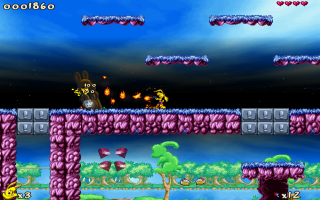
What the data disk mainly brought was fresh content — more levels, new environments. That's also where its ceiling sits: if you loved the base game, you get more of the same in solid quality. If the original left you cold, The Secret Files won't change your mind. It's aged pretty well visually — colorful, readable sprites — but the music is what I remember best. Robert Allard's compositions had the swagger that suited shooting green rabbits better than anything else.
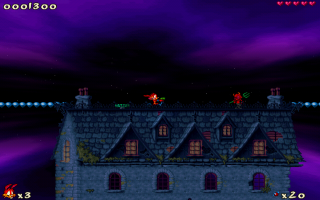
Today, it's easiest to enjoy if you remember the original and want to return, or if you love nineties platformers without modern commentary and ironic distance. It's straightforward action without pretense, unpretentious. Running it in a browser through DOSBox-based emulators is no trouble at all, and a quarter hour with it is an honest trip back to when all a game needed was to run smoothly and play well. Jazz delivered then. It delivers now.
 old
old


 ▶Doom1993MS-DOS / PC


 ▶Contra1988MS-DOS / PC


