این نقد هنوز ترجمه نشده است — متن اصلی (English) را نشان میدهیم.
Year 1992, Impressions Games. This British outfit had their historical strategy series going strong back then, rotating between medieval Europe and antiquity — and then someone said: let's try feudal Japan. The result is Conquest of Japan, a game that doesn't get much attention these days, but at the time offered something a bit different from yet another Civilization clone.
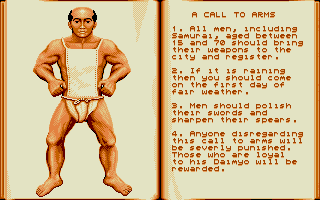
It's a turn-based strategy set in the era of Japanese clans battling for dominance over the islands. The goal is straightforward: unite Japan under your banner, which in practice means expanding your influence, recruiting soldiers, and eliminating rivals. The historical backdrop is more window dressing than a deep simulation — don't expect Shogun: Total War, everything here is considerably more abstract.
The game mechanics are typical early nineties Impressions: a map divided into provinces, resource management, army movement, and combat resolved either automatically or through a simple battle system. Controls work with both mouse and keyboard, the interface matches its era — functional, but a bit clunky. The game doesn't hold your hand much, so early attempts are more experimentation than actual strategy. That was normal back then, but it might turn off modern players.
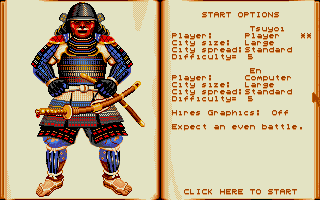
What sets Conquest of Japan apart from similar titles by the same company is its setting. Japanese aesthetics — or at least an attempt at them within an eight-bit palette — were pretty rare on PC in 1992. Impressions didn't go overboard with it, but the map and basic visuals have their own character. The Sound Blaster soundtrack was tolerable for its time; today you'll mute it after ten minutes. The game aged like all strategies of this rank: mechanically it works, but it doesn't apologize for demanding patience and a willingness to lose a few times before you figure out what it wants from you.
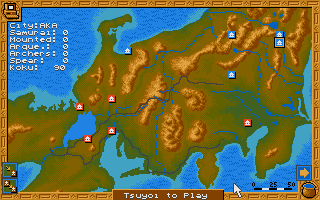
Today, Conquest of Japan appeals mainly to those who either remember the original experience or collect lesser-explored pieces from the Impressions Games catalog. It's not their best work — Caesar and Lords of the Realm have nothing to worry about — but as a historical artifact of early computer wargaming, it has its place. You can run it in a browser through DOSBox without fuss, and if turn-based strategies with pencil and paper next to the keyboard appeal to you, it'll keep you busy for a few evenings.
 old


 ▶Sid Meier's Civilization1991MS-DOS / PC


 ▶Chess1998Sega Mega Drive


