Year 1983. You have no mouse, no graphics, no internet hint guides. You have a blinking cursor and a command line where you type English like your life depends on it — and yet the game will grip you more than plenty that came after it.
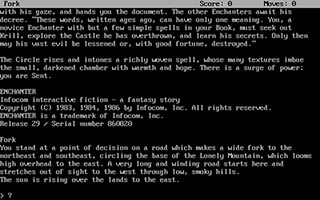
Enchanter is a text adventure from Infocom, masters of a genre that most gamers today know only by hearsay. It takes place in the world of Zork, but the atmosphere is considerably darker and more serious than that series. You play as a young, inexperienced wizard sent by the Circle of Enchanters to accomplish a task no experienced mage would ever accept — defeating the mighty warrior Krill, whose shadow spreads across the entire land. The logic of selection is simple: if you fail, the loss will be minimal.
Infocom was never about action. Enchanter is about reading, thinking, and manipulating spells — and that's where its most interesting mechanic lies. You copy spells from scrolls into a special book before you can use them. Each spell has limited uses, your character's memory is also limited, and so the game transforms into careful resource management. Classic commands like TAKE, EXAMINE, or GO NORTH are complemented here by incantations — and you'll soon discover that the right spell in the right place opens doors that brute force alone could never touch.
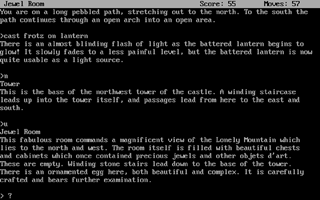
What worked brilliantly for the game in 1983 and works just as well today is the parser. Infocom had the best text analyzer in the business back then — it understood complex sentences, responded with wit to nonsensical commands, and didn't feel like a dumb password database. What has aged noticeably, however, is the necessity to save constantly and literally every single step. The game contains states from which there's no way back, and death comes silently and without warning. Without a manual or today's patience, you'll last about an hour, then you'll reach for an online solution and feel mild shame, but also relief.
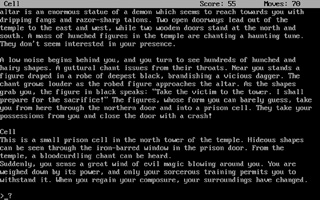
Enchanter is available today in your browser through various Infocom interpreters, and it's worth playing for two reasons. First is the craftsmanship — the texts are economical, precise, and sometimes genuinely striking, especially in moments when the atmosphere darkens and the game makes you feel how small your character is in the world. The second reason is historical value: Enchanter opened a series of three games and showed that Infocom could build worlds beyond Zork. If you have a relationship with text adventures or you're curious what adventures looked like before graphics came and took some of the imagination away from you — this is a good place to start.
 old
old


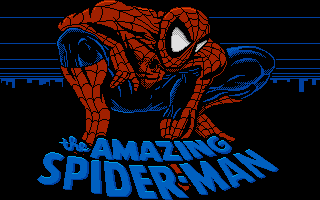 ▶Amazing Spider-Man1989MS-DOS / PC

