Year 1987, I'm sitting at a monitor with orange characters on a black background, and my dad asks what I'm messing with now. Crazy Cars by Titus Interactive. The answer isn't worth much.
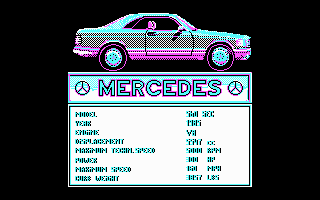
It's a racing game where you drive a Mercedes across the United States. You overtake opponents, stay on the road, and try to reach the finish line before time runs out. That's basically it. No story, no context, no explanation for why a Mercedes or why the USA. Titus simply threw a car on the road and said: drive.
The controls are straightforward to the point of primitiveness. The road winds forward in pseudo-3D perspective, turns come, traffic thickens, you occasionally crash into an opponent and slow down. The game responds, sure. But the feeling of driving is more like moving an icon across the screen than actually driving a car. The graphics on the PC version look modest even for 1987 — the Commodore 64 version was paradoxically slightly better visually, which says something. Sound? Sound Blaster wasn't standard back then, so most players made do with PC speaker beeps. The atmosphere didn't improve one bit.

What still bothers me is a simple question: how did this launch a trilogy. Crazy Cars II and III are significantly better games — they have more content, faster pacing, more acceptable production. The first one feels like an unfinished prototype that got into the box a bit too early. It's not a disaster, it's just a game that did the absolute minimum possible and somehow sold well enough for Titus to continue. In 1987 on PC, there wasn't much racing competition, and that probably helped a lot.
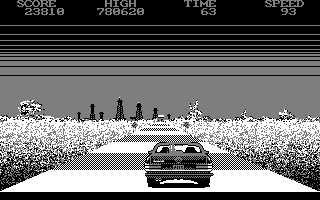
Today Crazy Cars appeals mainly to those who want to play through the entire trilogy from the start, or who are curious about where French Titus Interactive began. As a historical document, it's interesting for ten minutes. As afternoon entertainment — grab the second one instead. The first installment is most honestly described in one word: foundation. And foundations rarely celebrate.
 old


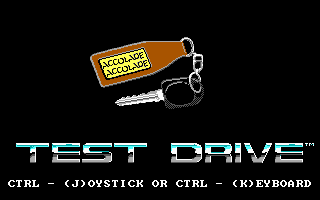 ▶Test Drive1987MS-DOS / PC


 ▶F11993Sega Mega Drive


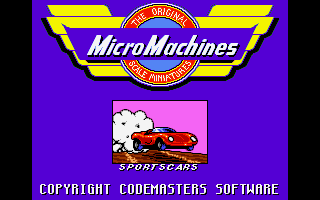 ▶Micro Machines1994MS-DOS / PC


 ▶Turbo Outrun1989Sega Mega Drive

