Этот обзор ещё не переведён — показываем оригинал (English).
A raven stands before a fence. That's it. That's the entire premise of Crow, a 1992 DOS adventure that doesn't bother with apocalypse lore or save-the-world nonsense. Just a bird and a barrier, and somehow this minimal setup works.

You play as a crow trying to cross to the other side of a fence. The game gives you a location, shows you what's lying around—sticks, pebbles, whatever—and lets you figure out the sequence yourself. No quest log, no objective marker, no hand-holding. The puzzle is straightforward enough that you understand the goal in seconds, but solving it requires poking at the environment, trying combinations, and accepting that failure is part of the process. It's the kind of thing that would bore a modern player to tears, but in 1992 this was refreshing. No bloat. No pretense.
The interface is clunky by any standard—point, click, drag, repeat—and the graphics are drab DOS-era stuff, all tan backgrounds and simple sprites. The crow itself barely moves convincingly. But there's an odd charm to this austerity. You're not distracted by voice acting or cutscenes. You're solving a problem, and that's all the game wants from you. It respects your time by keeping its mouth shut.

What makes Crow stick with people is that it's honest about what it is. Some call this minimalism genius. Others call it unfinished. The truth is probably somewhere in between. The puzzle is solvable, the logic holds up, and the game doesn't overstay its welcome. You finish it in maybe twenty minutes, depending on how thick you are.

It hasn't aged particularly well—the DOS era was rough on aesthetics—but it's worth playing now precisely because it's so small and so certain of itself. Modern adventure games drown you in dialogue trees and hand-crafted story beats. Crow just wants to know if you can move some objects around and think in sequence. That simplicity, that refusal to apologize for being simple, is actually kind of bold.
 old

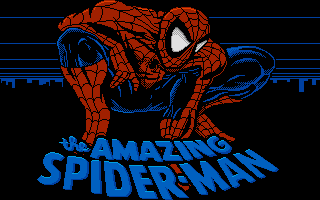 ▶Amazing Spider-Man1989MS-DOS / PC


 ▶Muppet Treasure Island1996MS-DOS / PC


 ▶Bubble Bobble - The Adventure1993ZX Spectrum
