Ulasan ini belum diterjemahkan — kami memaparkan versi asal (English).
Year 1992, arriving on a floppy disk is a game about a doctor whose name actually isn't Doctor. Anyone who wandered into British sci-fi at least once in the nineties knows exactly what I'm talking about.
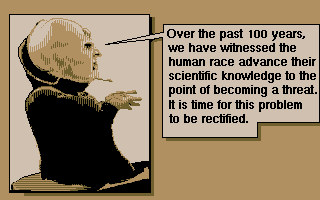
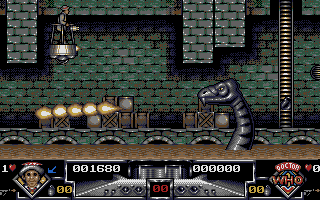
Dalek Attack by Alternative Software is an action platformer set in the world of the Doctor Who series. You play as the Doctor facing an invasion of Daleks — those iconically annoying alien machines with a voice like an angry tram and a single life philosophy: exterminate. The goal is simple. Get through the levels, survive, eliminate as many of those rasping metal monsters as you can.
The game works like a classic side-scrolling action platformer. You move across screens, shoot at Daleks and try not to die before something else gets a chance to try. PC controls back then were standard and hardly particularly comfortable — keyboard combinations your fingers first had to memorize and then unlearn. The difficulty is ruthless in places, as was customary at the time for games from smaller British studios that thought frustration could be mistaken for challenge.

What the game had — and what keeps it alive even today — is an atmosphere faithful to the source material. The graphics matched the era and platform, that is EGA/VGA aesthetics with a limited palette, but it actually suited the Daleks. The sound design on the PC speaker was exactly as unbearable as you remember. Overall, it's a game that came out on the back of a license, and that license gave it a character it wouldn't otherwise have had. Without the Daleks it would've been just another average platformer from the bottom half of a budget publisher's catalog. With the Daleks, it's at least an interesting artifact.
Nowadays Dalek Attack will be played mainly by two types of people: Doctor Who fans wanting to experience everything the series ever inspired, and retro gamers collecting period curiosities from the British scene. Don't expect a revelation. But as a one-hour trip back to 1992 packed with nostalgia for a gaming industry that hadn't yet heard of "quality assurance," it's worth your time.
 old
old


 ▶Doom1993MS-DOS / PC


 ▶Contra1988MS-DOS / PC


 ▶Ultimate Mortal Kombat 31996Super Nintendo


