Ulasan ini belum diterjemahkan — kami memaparkan versi asal (English).
When I first sat down at the virtual steering wheel, I expected something like a racing experience. Car & Driver offered me instead physics similar to throwing a tennis ball across ice — the car goes where it wants, and you're just trying to survive. This 1992 simulator is everything except user-friendly.

It's a racing simulator where you learn to drive different tracks and train in a car with such behavior that you feel like you're piloting an ice rink on wheels. This isn't arcade fun, it's pixel-based self-torture. The goal is simple — get through the track as fast as possible, take corners, hit the gas, and guess what the car will do. But the physics responds with a lag, as if the car first has to think about whether it'll even listen to you.
Controls take a while to get used to. The camera follows the car from behind, the title screen stabs your eyes like an old film without corrections, and when you accelerate into a corner, the car behaves as if your controls just had a heart attack. It's not the worst physics of the era, but the thing is, you can only play it if you have infinite patience. Sometimes you manage to take a corner cleanly and then such a surge of satisfaction hits your system that you forget all the frustration.

Car & Driver is a relic from when racing simulators still didn't know what they were doing — and worse, they knew it even less. With hindsight, though, it's an interesting landmark in the history of how long the journey was from early attempts to today's performance and sophistication. Proof that not everything printed on a floppy disk deserved to be preserved.

Playing it in a browser today is more of a history experiment than fun. You might be interested in how games were played in those "golden" nineties, or want to understand why people played arcade racing games instead. But honestly — Skip To My Lou while driving would entertain you more.
 old
old


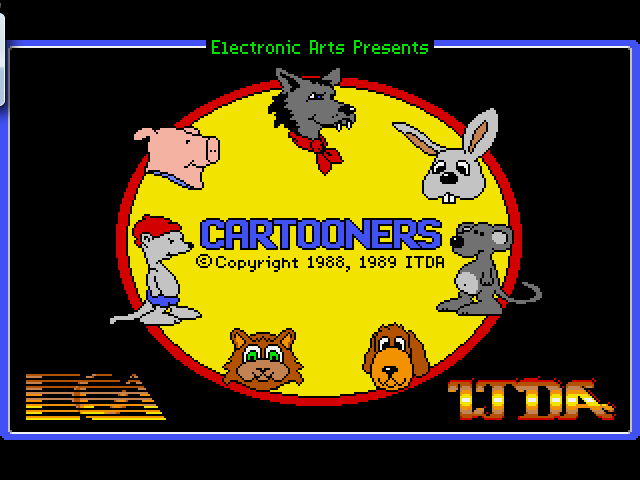 ▶Cartooners1989MS-DOS / PC


