Ulasan ini belum diterjemahkan — kami menampilkan versi asli (English).
John Romero. A name that today everyone associates with Doom, Quake, and that infamous Daikatana commercial. But before all that came around, young Romero was sitting at his PC writing simple action games that sold for a few dollars. Pyramids of Egypt from 1989 is one of them.
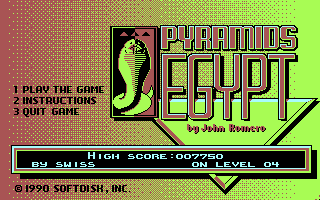
The game comes from Ideas From the Deep, an early project that Romero worked on long before id Software. The setting is exactly what the title promises — Egypt, pyramids, the mysteries of antiquity. The goal is simple: navigate through a series of screens, avoid obstacles and enemies, and move forward. No complex plot, no cutscenes. 1989 was a different time.
The gameplay is pure arcade. The player moves across screens from top to bottom or from the side — the exact layout depends on the specific part of the game — and avoids whatever wants to kill them. The controls are straightforward, functional by the standards of the era. It's not a game that frustrates you with unclear controls or annoying physics. It frustrates you simply with what's on screen, and that's fine.
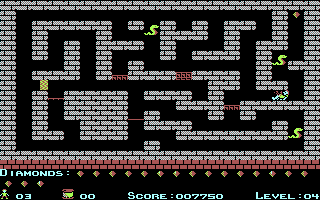
Why do we remember it? Honestly — most people don't. Pyramids of Egypt is interesting mainly as an artifact, as proof that even legends start somewhere. Romero was still cutting his teeth back then. The game itself doesn't introduce any groundbreaking mechanic, the graphics were average even for the year of release, and the musical accompaniment on the PC speaker was exactly what you'd expect. Yet there's something solid about it all — economy, straightforwardness, no unnecessary delays.
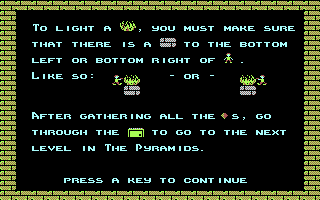
Today you'll play Pyramids of Egypt more out of historical curiosity than for fun. If you're interested in what games looked like during the time when Romero had no idea what he'd be doing four years later, this is an honest document of that era. You can get through it in your browser in an afternoon — and I really mean that as an upper estimate.
 old
old


 ▶Doom1993MS-DOS / PC


 ▶Contra1988MS-DOS / PC
 ▶Ultimate Mortal Kombat 31996Super Nintendo
