Ce test n’est pas encore traduit — nous affichons la version originale (English).
The dragon doesn't listen. You tilt the controller, waggle it left, waggle it right, and the beast on screen does something vaguely related to your intentions three seconds later. Welcome to Lair, Factor 5's 2007 PS3 exclusive that somehow ended up in PC emulation circles with a platform tag that makes nobody happy.

You're riding a dragon through a fantasy war, which sounds like the kind of power fantasy that should write itself. Instead, you're fighting the motion controls more than the enemy armies below. The studio behind those silky-smooth Star Wars flight sims decided that gesticulating at your screen would be more immersive than buttons. They were wrong, but their ambition was genuine—ambitious enough to crash hard against the wall of what motion control could actually do in 2007.
Mechanically, you're herding your dragon through objective-based missions: torch buildings, grab soldiers, avoid obstacles, repeat. The dragon responds to your thrashing, but with a lag and imprecision that turns what should feel like aerial dominance into wrestling match between you and the game's interpretation of your input. The camera swings wildly when you don't want it to. Quick-time events interrupt flow constantly. Performance stutters, and the game looks muddy even by that generation's standards—technically ambitious but visually flat, like Factor 5 poured everything into making the motion system work and had nothing left for the visuals.
What keeps Lair from being forgotten entirely is that kernel of genuine creativity. The dragon felt novel when few games let you pilot something that big. The orchestral score hits harder than the gameplay deserves. There's a sense of scale and spectacle that rose above the mechanical frustration, which is probably why people still talk about it as a noble failure rather than a embarrassment.
Today, emulated and stripped of motion controls, Lair plays like a museum piece of early-generation console ambition. The controls feel ancient. The mechanics feel thin. If you want to understand what Factor 5 was reaching for—and how badly motion gaming could fumble that reach—it's worth an hour. Everyone else can skip it without missing anything except a cautionary tale about technology chasing spectacle.
 old

 Tee T Shirt GTA IV 6 Rockstar Grand Theft Auto Vice CityVoir sur eBay »
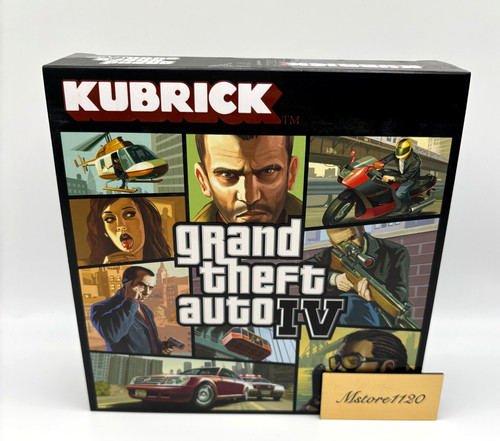 Medicom Toy Kubrick Grand Theft Auto IV 4 figurines jeuVoir sur eBay »


 ▶Beyond Castle Wolfenstein1985MS-DOS / PC


