این نقد هنوز ترجمه نشده است — متن اصلی (English) را نشان میدهیم.
Year 1994, afternoon, the whole screen belongs to a kid with a soccer ball, and I'm asking for the first time why an alien is stealing the World Cup. The answer is simple: because he can, and that's reason enough.
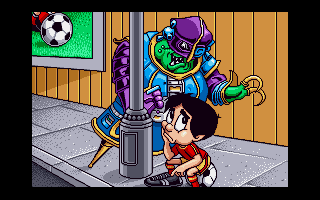
Soccer Kid is a platformer from Krisalis Software, where this crazy premise drives the entire story. An alien steals the soccer cup, it breaks apart during its flight through space, the pieces land in various places on Earth, and you — as a stubborn soccer kid — have to put it back together. A simple rescue mission, the kind that eighty percent of games back then used as an excuse for eight worlds full of enemies.
But Soccer Kid had one specific idea that set it apart from dozens of other platformers of that era: the ball. You don't just carry it with you as a prop, the hero's movement is built directly on the ball. You dribble, kick it at enemies, bounce off it to overcome obstacles. The controls have a pleasant specificity at first — the ball doesn't behave like a weapon from another action game, it takes finesse. The problem is, that finesse sometimes turns into frustration, because precision doesn't always match what the game visually seems to allow. One bad ball bounce sends you into a pit, even though your intention was completely reasonable.
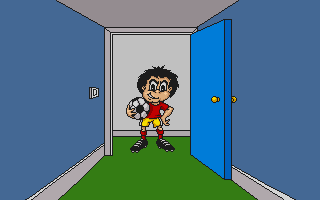
What I remember best from that time are the graphical locations inspired by different countries — the game takes you across the world, and each stop had a visually distinct atmosphere. Krisalis did solid work making each environment look a bit different. The music kept up with the times — competent, but unmemorable. Today the game has aged true to its genre: platformers from the first half of the nineties were difficult in a way that's now considered more design out of necessity than by intent. The difficulty curve is uneven and sometimes jagged.

Today Soccer Kid will appeal mainly to those who actually played similar games in the nineties and want to refresh their memory of what that era of platformers looked like on PC — not on console, but specifically on a computer with DOS and Sound Blaster. The ball mechanics are still original enough to justify a few afternoons. Newcomers without nostalgic ties will probably hit a wall where the game stops being interesting before they overcome it.
 old
old


 ▶Doom1993MS-DOS / PC


 ▶Ultimate Mortal Kombat 31996Super Nintendo


 ▶Contra1988MS-DOS / PC