این نقد هنوز ترجمه نشده است — متن اصلی (English) را نشان میدهیم.
Year 1994, Infogrames, tennis. Three words that would normally make me reach for another floppy disk. And yet I played International Tennis Open back then more than I'd be willing to admit.

It's a tennis sports simulation for MS-DOS, the kind that came out of French Infogrames with logical regularity in a series back then. No story, no intro with dramatic music. You step onto the court, pick your player, and play tennis. That's all there is to the plot.
The controls are straightforward — the main menu offers options to start a match, practice, or load a saved game. You get back to the menu via Escape, which I tested with suspiciously frequent use in the beginning. The actual gameplay relies on timing your shots and positioning yourself correctly on the court. It's not an arcade game where you mash one button and the ball flies on its own. You have to think, read your opponent's move, choose between forehand and backhand. For 1994, that was surprisingly solid. The ball physics made sense, and the AI opponent didn't feel like a random direction generator.
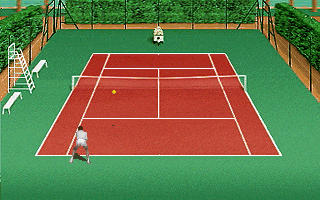
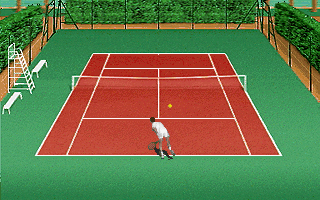
The graphics didn't hurt the eyes for their time. The court perspective, player animations — nothing groundbreaking, but functional and readable. Sound Blaster gave it proper modesty; the sound of the ball hitting the racket and court surface was enough for your brain to believe you were playing tennis. Today the game looks exactly how 1994 should look — dated, but not unbearable.
What keeps International Tennis Open alive is its accessibility. It's not a title that demands hours of training. You'll understand the principle in five minutes and then it's up to you how deep you want to dive into timing and tactics. Back then it was ideal for an afternoon match with a friend at one keyboard. Today in your browser it fits anyone who wants to spend a quarter hour with something undemanding and straightforward — or who wants to remember what sports looked like on a computer before licenses and gigabytes of motion capture data took over.
 old


 ▶European Club Soccer1993Sega Mega Drive
 ▶The Manager1991MS-DOS / PC


 ▶NHL '941993MS-DOS / PC
