این نقد هنوز ترجمه نشده است — متن اصلی (English) را نشان میدهیم.
Year 1988, I'm sitting at a classmate's computer and not quite sure what to expect. Charlie Chaplin — legend of silent film — as a video game on DOS. An idea that could have gone catastrophically wrong, but at least it had ambition.
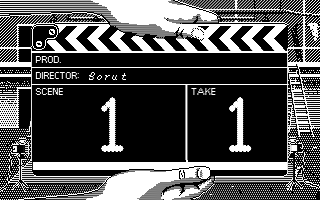
British studio Canvas under US Gold distribution bet on an unconventional premise: you play a director trying to shoot a sensational film starring Charlie Chaplin in the lead role. So it's not a straightforward platformer with Chaplin's bowler hat and cane — the game wraps the action in a sort of film production framework, which on PC at the end of the eighties was at least unusual.
At the start you go through a script and sign a contract — moving through a brochure with arrow keys, nothing complicated, more of an atmospheric intro than actual mechanics. Then comes directing scenes, which you can shoot in any order you like. The actual filming of scenes switches you to direct control of Charlie, where you move using the numeric keypad or arrows and try to play out the scene as it should be. Here the game shows what it really is — action minigames with Chaplin's physical comedy as the theme. The controls are stiff in a way typical of software from that era, and some scenes require patience that nowadays feels more like penance than fun.
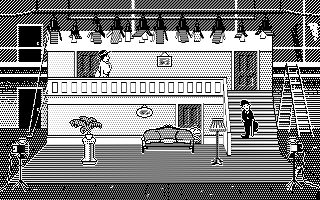
What you can't deny the game is the idea. Connecting Hollywood backstage with direct character play was fresh in 1988. Chaplin's visual style — silent film, black-and-white aesthetic, grotesque humor — translates into games with CGA or EGA palette limitations surprisingly well. The problem is that ambition outpaced execution. The game quickly runs out of steam, and after playing through a few scenes there isn't much else to offer. It aged the way ideas without enough content behind them do — nostalgic at first glance, hollow at the second.
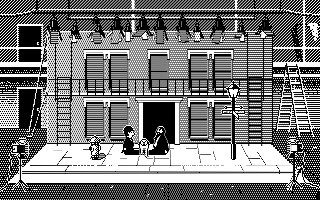
Today it'll mainly appeal to curiosity collectors and those with a soft spot for licensed games of the eighties — an era when a famous name on the box mattered more than game design. You can get through it in a browser over an afternoon, but at least you'll have something to talk about. Chaplin would probably have shrugged and done it with grace.
 old
old


 ▶Pinball Fantasies1992MS-DOS / PC


