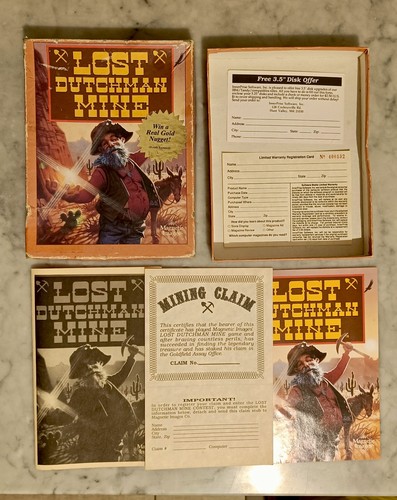
Arizona, 1989, a creaky computer speaker wheezes out something vaguely resembling a western melody, and I'm hunched over a map half its symbols mean nothing to me. Lost Dutchman Mine had me hooked from the name alone — the legend of the lost gold mine in Arizona's Superstition Mountains is real, American, and mysterious enough to make a game out of.

Magnetic Images took a gamble in 1989 on an understated genre I'd call survival simulation. You're a prospector setting out from base camp into the unforgiving Arizona wilderness with one goal: find the legendary mine, strike gold, and get out alive. Pulling off both at the same time isn't as simple as it sounds.
The game runs on resource management and decision-making. You plan supplies, choose routes, deal with weather, fatigue, and random events — everything from Apache tribes to venomous snakes to running out of water. The interface is sparse and stripped-down, typical of late-80s DOS software. No real-time action, no animated combat. You decide, the game calculates consequences, and you suffer them. The pace is slow and demands patience most people don't have today — but back then, we didn't have a choice.

What still works is the atmosphere. The desert and mountains feel genuinely dangerous — not as abstract hit points, but as an environment that slowly grinds you down if you don't plan ahead. Random events vary enough that each trek into the hills feels a little different. What hasn't aged well is the presentation — the graphics are minimalist even by 80s standards, and the controls demand you learn the software's logic, not human logic. Your first few playthroughs will mostly be spent figuring out what the game actually wants from you.

These days, Lost Dutchman Mine appeals mainly to people who love historical oddities and pen-and-paper strategy. If you've ever enjoyed text simulators like Oregon Trail and don't mind a game that looks like a spreadsheet with delusions of grandeur, you'll find a solid, thoughtfully-designed challenge here. The legend of the lost mine lives on — and this software is one of the few pieces of evidence that someone in the 80s took it seriously.
 old



 ▶Windows 95 in the BrowserMS-DOS / PC


 ▶Pinball Fantasies1992MS-DOS / PC


 ▶NHL '941993MS-DOS / PC
 ▶Free Croatia (DOS game)MS-DOS / PC
