I remember once at work we were debating which old game hit us the hardest — and one colleague said without hesitation: Moonstone. The other nodded. I was the only one in the room who had no idea what they were talking about. That needed fixing.
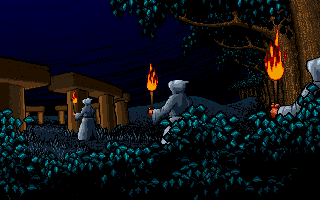
Moonstone: A Hard Day's Knight from 1992 by Mindscape is a bit genre-defying. The RPG label fits only halfway — it's more of a turn-based strategy on a map of a medieval fantasy world that switches into direct action every so often. Four knights compete for pieces of a lunar stone, traveling through a landscape full of monsters, druids, and traps for the unwary. The goal is simple: collect fragments and outlast your rivals.
It's that action that's the reason people remember this game. Combat is brutal, straightforward, and satisfyingly gory — in 1992, that wasn't a given. Limbs rotating, severed extremities, spurting blood. The graphics handled it with surprising eagerness. Every clash feels like a life-or-death gamble, because death is instant and permanent. No loading a save state, no second chances — a knight falls and that's it. The strategic layer on the map adds risk assessment decisions: which route to take, who to challenge, when to back away. The game makes you think, then punishes you for thinking with randomness.
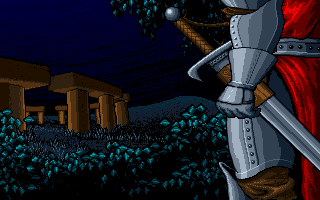
What set Moonstone apart from the competition of its day was multiplayer for multiple players on one computer. Suddenly it stopped being solitary suffering and became a matter for the whole room. That has aged well. What hasn't aged as well is the combat controls — you need to get used to them, and the first hour is more confusing than fun. Difficulty is uncompromising in a way that was the norm in the nineties, but can deter nowadays.
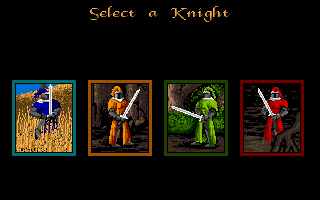
Today Moonstone suits those who like one-shot games where every decision carries weight. This game isn't a nostalgic toy — it's genuinely demanding and has teeth. You can run it in your browser via DOSBox without much fuss, and if you can get a live opponent sitting next to you, in an hour you'll understand why people remember it thirty years later.
 old
old


 ▶Dungeon Master1989MS-DOS / PC


 ▶Amberstar1992MS-DOS / PC
 ▶Ancient Domains of Mystery1994MS-DOS / PC
 ▶Autoduel1988Commodore 64


