Year 1993, me sitting at a 486 and trying out adventures my friends brought on floppies. Seymour Goes To Hollywood slipped past me back then — and replaying it now, I understand why. Not that it's a bad game, but it simply got lost in the sea of adventure games from that era.
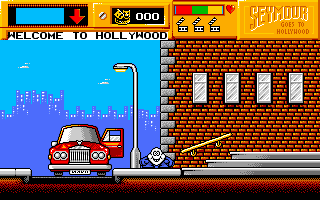
Big Red Software was making games primarily for younger players, and Seymour is their somewhat comedic character who repeatedly finds himself in trouble. Here he's headed to Hollywood chasing fame, arriving in a limo full of confidence, only to be stopped at the gate by a security guard who doesn't know him and has no intention of letting him through. The whole studio then becomes the environment where Seymour gradually solves puzzles to get further and finally make it as a movie star.
It's a point-and-click adventure with simple controls, clearly aimed at pubescent or pre-pubescent players. The puzzles aren't brutal, the world's logic is sometimes childishly straightforward. The graphics match the era's average for lower budgets — colorful, functional, unpretentious. The Sound Blaster music does its job and then you forget about it. The game doesn't waste your time, but it doesn't really inspire much thinking either.
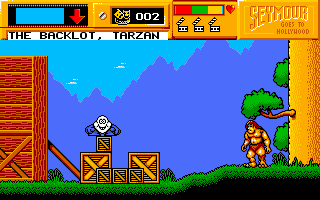
What Seymour Goes To Hollywood brought mainly was Hollywood settings as game environments — film studios, film shoots, showbiz. It was a decent idea, but in 1993 it didn't make much of that opportunity. It aged exactly as expected: quickly, without much resistance, but without leaving any particularly strong mark. I remember it worse than plenty of stuff I played around the same time.
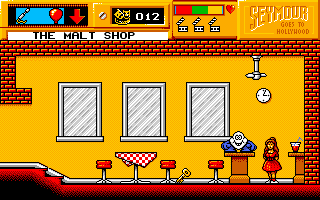
Today, Seymour Goes To Hollywood will mainly appeal to those wanting to play through the whole series, or those looking for a casual adventure to kill an afternoon without pressure or frustration from tough puzzles. It runs in a browser via DOSBox without complications and the fun lasts an hour, maybe two. That's not a complaint — sometimes that's enough.
 old
old


 ▶Amazing Spider-Man1989MS-DOS / PC


