Year 1996, mid-nineties, and I'm sitting in front of a monitor with blocky graphics, where a pixelated police commando awaits my command. Deadline from Millennium Interactive arrived at a time when the word SWAT still evoked more of a film thriller than a game series — and this real-time tactical strategy tried to milk that for all it was worth.
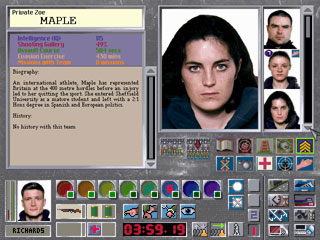
The player commands a special police unit and the task is to plan and execute raids against terrorists, hostage situations, and various crisis scenarios. The setting is civilian, grounded — no sci-fi, no fantasy. Just buildings, room layouts, and unpleasant people inside who need to be either arrested or neutralized. On paper, exactly what a tactical title from this era should do.
The mechanics rest on dividing the team into groups and assigning tasks before and during missions. Planning is essential — improvisation usually punishes you. Real-time adds pressure, but not always pleasantly: the interface is typically nineties, so hardly intuitive, and before you figured out what the game actually wanted, a couple of missions would run you over like a streetcar. The sound design and music felt solid back then; Sound Blaster handled it without complaint.
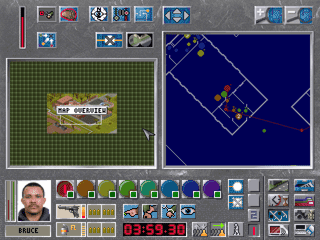
What Deadline holds in memory is mainly the sense of a market gap at the time. Rainbow Six wouldn't arrive for another two years and this segment was still in its infancy. Millennium therefore hit the genre at the right moment — except the execution was uneven. Enemy AI worked acceptably, but your own team sometimes acted with the conviction of wet paper. The game lacked a bit of that polish that would have made it a cult classic instead of a curiosity.
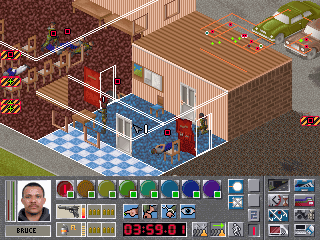
Today Deadline appeals mainly to those wanting to experience what tactical strategies looked like before Rainbow Six and SWAT taught the genre proper manners. It's an archaeological dig, not a golden find — but interesting for fans of the genre and era. Play it in your browser with some patience and without expecting a polished modern title. Historical context saves it more than the gameplay itself.
 old
old


 ▶North & South1990MS-DOS / PC


 ▶Teenage Queen1988MS-DOS / PC


 ▶Chess1998Sega Mega Drive


