The French developers at Coktel Vision had a peculiar knack in the first half of the nineties for doing things their own way. While Sierra and LucasArts battled for dominance in the "point-and-click with a nice story" department, these Paris-based devs casually released something in 1993 that looked like a fairy tale book animated in the fever dream of a drunken illustrator.
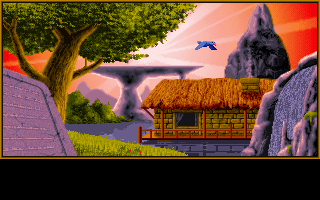
Ween: The Prophecy is a point-and-click adventure set in a fantasy world where you control a pair of characters — a young man and his companion — who must fulfill an ancient prophecy and save the world from a dark force. Sounds like a template. Except Coktel Vision took that template, twisted it, and painted it with colors you wouldn't normally find in adventure games.
Gameplay rests on the classic formula of collecting items and combining them with your environment. Controls are straightforward, inventory is clear, the interface doesn't get in the way. What does get in the way, though, are the puzzles. Some are elegant, others follow logic that seems to exist exclusively in the developers' minds — and not in the most flattering sense. If you didn't have an all-nighter and the patience of a Benedictine monk in the nineties, you probably just grabbed a walkthrough from a magazine for certain sections. That was normal back then; today it feels like a design debt the game never paid off.
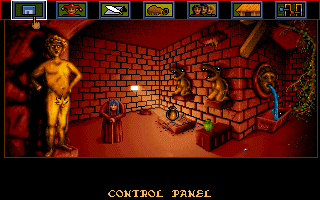
What Ween does deserve credit for, though, is its visual style. The graphics have a drawn, almost storybook aesthetic — not realistic, not pixel-art in the sense of technical limits, but deliberately illustrative. On a 486 with VGA, it looked different from the competition, and that mattered back then. The music and sound effects through Sound Blaster round out the atmosphere without overdoing it. The game has its own world, and that world holds together, even if its rules occasionally make sense only to themselves.
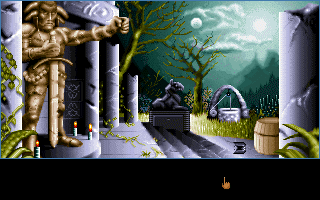
Today, Ween appeals mainly to those who want to taste what European adventures looked like in the first half of the nineties — which is to say, different from American productions, with different humor, different aesthetics, and sometimes frustrating but unique logic. Fire it up in DOSBox Online or archive.org in your browser with no installation needed, and even if some puzzles make you cross-eyed, the atmosphere alone is worth it. It's an artifact from an era when French developers believed adventures didn't have to look like everything else.
 old


 ▶Muppet Treasure Island1996MS-DOS / PC


 ▶Bubble Bobble - The Adventure1993ZX Spectrum

