I was about ten, the monitor flickering, and I stood before the screen in silent awe — my opponent was approaching slowly, with animation that had no rival on PC back then. Karateka from 1984, available on DOS since 1986, wasn't just a fighter. It was a small film lesson at a time when other games were still drawing stick figures from squares.
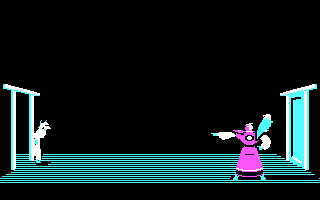
Jordan Mechner wrote it as a twenty-year-old student. Yes, that Mechner — before he made Prince of Persia, he made this. The premise is simple: enemy fortress, kidnapped girl, a series of opponents you must defeat before reaching the final boss fight. No complex plot. But that wasn't the point; the point was movement.
Mechner rotoscoped real footage of karate fighters — the same technique he'd later use for the prince — and the result was stunning for the time. Characters moved like characters, not like ghosts bouncing across a grid. The controls are straightforward: movement, punch, kick, block. Duels have a rhythm you must read; enemies can't be brute-forced, you wait for an opening. Anyone who wanted to mash buttons blindly soon found themselves on the ground.
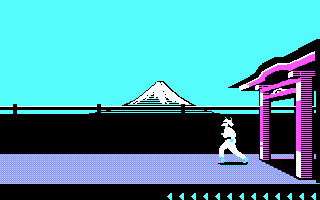
What's aged? The difficulty is at times treacherously unfair — it punishes us more for not reading the game. And length? You'll blow through it in an afternoon. But that's no complaint, that's period-appropriate. What still holds up, though, is that animation. Open it alongside anything else from 1986 on DOS and you'll understand why everyone noticed it.
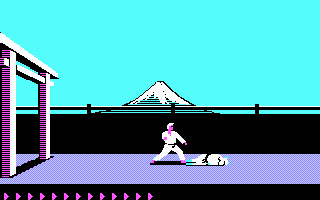
Today I'd recommend it to anyone who wants to see where Prince of Persia really came from. It's a historical document in game form — short, beautifully made, and functional even without nostalgia. You can beat it in your browser in an hour, maybe two, and you'll walk away with respect for one student who decided animation finally had to look like movement.
 old
 PC - Karateka (Big Box) Broderbund在 eBay 查看 »
 10x floppy disk games C64 Atari 400 800 computer PC Karateka Strip Poker Artworx在 eBay 查看 »
 Karateka PC 5.25" floppy disks and manual only在 eBay 查看 »
 Karateka Atari 400/800/XL/XE Floppy Disk Vintage PC Game 80s 5.25 UNTESTED AS-IS在 eBay 查看 »


 ▶Bubble Bobble1989MS-DOS / PC


 ▶Ghosts N Goblins1987MS-DOS / PC


