The moment you boot Cube, the screen fills with geometric shapes and a ticking clock. There's no story, no intro, just a silent figure staring at a puzzle that demands a solution in the next few seconds. This is pure arcade logic distilled to its essence—no handholding, no narrative crutch, just your wits against the timer.

Cube lands squarely in that peculiar DOS niche where puzzle-arcade hybrids thrived. You navigate a grid-based maze of blocks and obstacles, collecting items or triggering sequences before time runs out. Each level introduces a new twist—sometimes you're dodging falling elements, sometimes you're routing through a maze while the border closes in, sometimes you're matching patterns against a shrinking window. The premise never gets complicated, but the pressure never lets up either. It's the kind of game that understands that repetition and escalating speed matter more than visual spectacle or plot.
The controls are tight and immediate, which is essential when you're playing against seconds ticking away. Movement is snappy, reactions count, and fumbling costs you a life. The puzzle logic itself isn't opaque—you can see what needs doing—but execution under time pressure is where the real game lives. There's no elaborate presentation or ambient soundtrack to cushion failure; you simply restart and try again. The game respects your time by keeping rounds short and punishing mistakes swiftly rather than dragging out defeat.
What made Cube notable in 1991 was its refusal to coddle. This was the era when arcade sensibilities still dominated PC gaming. Cube doesn't explain itself, doesn't reward dawdling, and doesn't care if you find it fair. That directness has aged well—it feels honest in a way many puzzle games don't, where accessibility sometimes means stripping away the actual challenge.

If you've spent afternoons grinding through DOS puzzle collections, Cube will feel immediately familiar. It's not revolutionary, but it's competent and demanding in equal measure. The blocky graphics hold up because they're functional; the simple premise holds up because simplicity doesn't spoil. Load it in an emulator or DOS box and give yourself ten minutes. You'll know within that timeframe whether this scratches your itch for geometric pressure cookers or whether you need something with more narrative meat on its bones.
 old
 Pac-Man Graphic T-Shirt Black Short Sleeves Super Soft推广链接在 eBay 查看 »
 Bandai .H.Figuarts PAC-MAN BEST SELECTION Action Figure推广链接在 eBay 查看 »
 Pac-Man and the Ghostly Adventures Lord Betrayus Plush推广链接在 eBay 查看 »
 Pac-Man Acrylic Wall Art Retro Arcade Room Decor Circular推广链接在 eBay 查看 »
 Namco Pac-Man Red Ghost Miniso Resin Key Chain NOS 2020s推广链接在 eBay 查看 »
 MGA Entertainment Pac-Man Electronic Handheld Arcade推广链接在 eBay 查看 »


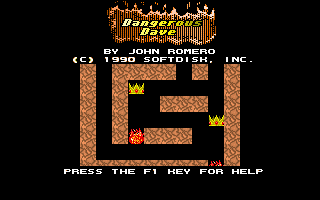 ▶Dangerous Dave1990MS-DOS / PC


 ▶Mravenečci2026Webová hra


 ▶Pinball Fantasies1992MS-DOS / PC