When you see "3D" in the title and "1998" as the release year, every veteran knows what to expect. Polygons you can count on your fingers, textures that look like crumbled chocolate, and hunter model movement as stiff as a robot on a construction site. Yet this very stiffness carries a whiff of authenticity — it's not an attempt at realism, it's simply what could be done on a home PC back then.

3D Hunting: Grizzly is what you'd call a "hunting simulator" — a game where you stand in a landscape with a rifle and wait for a grizzly bear to appear in the distance. The objective is as primitive as it gets: you see the animal, you aim, you shoot. No story, no narrator, no intention to be anything more than a shooting task. The setting isn't precisely defined; it just looks like an empty 3D system with a few vegetation objects and a horizon the color of a burning forest. The game is neither easily accessible nor funny — it's just there.
It's played in first person, or more precisely: you see a window with a rendered crosshair, surrounded by a dark screen area. The controls follow an old FPS scheme — mouse or keyboard movement, shooting with a simple click. The problem is that the ballistics physics are hard to predict, and animal AI (if it exists at all) amounts to the bear occasionally wandering through the landscape with little interest in your presence. You'll scrounge for bullets, try to hit a moving target in a blurry 3D environment, and — sometimes — you'll manage it. The fun is minimal, but it exists.
Why do we remember it? Because it represents a certain type of game that vanished without a trace. It wasn't an ambitious game, it had no fanbase, no cult status. It was one of thousands of half-baked games someone released on a floppy disk and the world forgot about. In the context of its era — when 3D was still new and interesting in itself — it made sense: look, we can render a bear and let it roam around. Today it's the opposite — that very primitiveness makes it interesting as an artifact.
Playing it today means traveling back to a time when three polygons and muffled sound meant the pinnacle of technological ambition. It won't be fun in the classical sense, but you'll know what it looked like when someone tried to make a hunting simulator without resources, knowledge, or second thoughts about whether they should. That has its value.
 old

 DOOM Slayer Shotgun Graphic T-Shirt Black推广链接在 eBay 查看 »
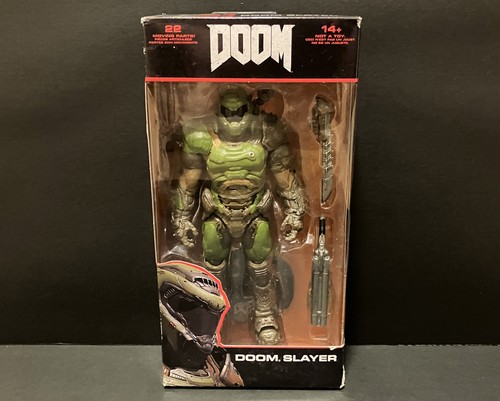 Doom Eternal Slayer McFarlane Toys Action Figure推广链接在 eBay 查看 »
 Doom Retro Wall Banner Flag Cover Art (3 x 4') Doomguy推广链接在 eBay 查看 »
 Doom: The Dark Ages - Doom Slayer Shield Medallion& Art推广链接在 eBay 查看 »
 Loot Wear Exclusive DOOM Eternal Slayer Graphic T-Shirt 2021推广链接在 eBay 查看 »
 DOOM: The Dark Ages Slayer Collectible Coin Figure Limited推广链接在 eBay 查看 »


 ▶Bubble Bobble1989MS-DOS / PC


