Hindi pa naisasalin ang review na ito — ipinapakita ang orihinal (English).
The year is 1981, Wolfgang Petersen's Das Boot. Three and a half hours of cramped steel, sweaty sailors, and depth charges hammering against the hull from outside. When the eponymous game launched in 1990 from Artech Studios, it was clear that any comparison would leave no one entirely victorious.
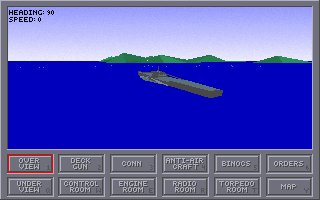
Das Boot is a submarine simulator set during World War II. You command a German U-boat somewhere in the Atlantic, tasked with sinking Allied vessels, surviving anti-submarine patrols, and returning to port. The genre was having its golden age — MicroProse's Silent Service came out in 1985, 688 Attack Sub in 1989 — and Das Boot rode the wave of the film's popularity into stores.
Mechanically, it's a competent middle ground between arcade and simulation. You control depth, heading, speed, issue orders to the torpedo tubes, and monitor sonar. The interface is clear for its time, though switching between the command screen and map on an MS-DOS keyboard eventually wears thin. The game's greatest strength lies in moments of tension — a convoy on radar, the silence before firing, then a barrage of explosions overhead that nerves you even without the film's score. Its greatest weakness is repetition. After a few hours, missions start to feel like two drops of water from the Atlantic.
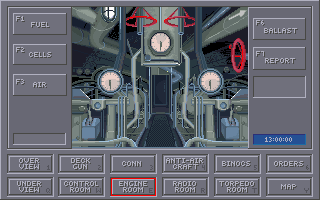
Comparison with the film is inevitable, and the game emerges mixed from that contest. The claustrophobic atmosphere is hinted at — visually you're limited to text and a few static screens, not a camera capturing sweaty faces. Expecting a reproduction of Petersen's vision would be folly. What the game captures is the mechanics of survival: lurk, wait, fire at the right moment, then dive as fast as possible. In 1990, that worked. I didn't believe in the crew as film characters, but the depth gauges genuinely unnerved me.
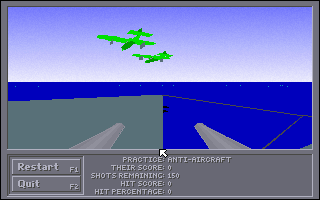
Today Das Boot appeals mainly to the historically minded player curious how the genre looked before Aces of the Deep or Silent Hunter arrived. As a standalone experience, it's more curiosity than must-play — but precisely because it's a licensed title from the turn of the eighties and nineties, it holds value as a period artifact. Fire it up in a browser, survive one convoy, and feel that specific peace of DOS sonar pinging — that's worth half an hour without excuses.
 old
old


 ▶Pinball Fantasies1992MS-DOS / PC


