Recenzia zatiaľ nie je preložená — zobrazujeme pôvodné znenie (English).
Year 1988, I'm twelve years old, and a friend brings me a floppy disk with something that looked like a peek into a medieval village through a tiny window of a Hercules monitor. Feud from Binary Design wasn't a random game — it was one of those pieces where you know within the first minute that someone thought about it longer than over a weekend.
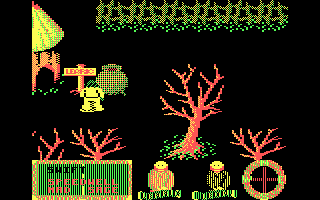
You're a sorcerer — one of two brothers who clearly don't see eye to eye. Your rival is the other brother, equally capable, equally cunning. The goal is simple: find the right ingredients, mix up working spells, and eliminate your opponent before he eliminates you. The setting is fairy-tale medieval, without excessive exposition — a village, a forest, herbs, magic. You don't need to know anything more.
The game is action-packed, but emphasizes gathering and combining materials. You run around a sprawling environment, collecting ingredients scattered across the map, and mix spells from them with various effects — offensive, defensive, movement-based. Your rival brother does the same and he's no dummy. The controls are simple, but navigating the terrain and remembering what works against what, that's the real game. Whoever learns the recipe first has the upper hand. Whoever mixes up ingredients ends up healing the enemy instead of themselves — and yes, that happened to me more than once.
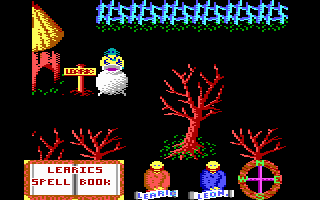
Feud stood out back then because the opponent's AI didn't feel like a dummy waiting to be hit. Your brother actively gathered, combined, and attacked. For 1988 on the MS-DOS platform, that was solid performance. Graphics were modest even by the standards of the time, sound practically non-existent, but that didn't matter — the tension of racing against your opponent made up for it. Today the game has aged significantly on the technical side, of course, but the game loop — gather, mix, strike — remains readable and functional.
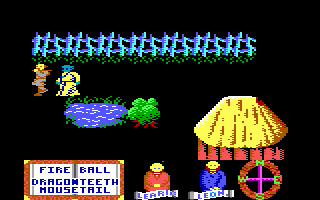
Today Feud will be appreciated mainly by those who love simple systems with considerable depth and nostalgia for the days when a game didn't come with a forty-page tutorial. It does not run in the browser here — the page carries a description, screenshots and the release data. It's not a groundbreaking title, but it's honest. And in 1988, that meant something.
 old
old


 ▶Doom1993MS-DOS / PC


