Этот обзор ещё не переведён — показываем оригинал (English).
Year 1985. MS-DOS, CGA monitor, four colors and sound that was more of a promise than reality. Into this environment came Alan Farmer with Willy the Worm — and what he delivered was surprisingly honest for its time: no grand ambitions, but solid workmanship.
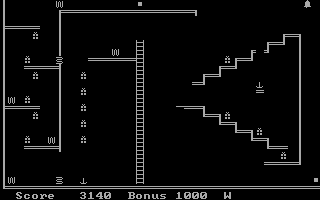
Willy the Worm is an action game where you control a worm navigating through obstacles. No complex story, no rescue missions. The goal is simple — get through the levels alive. The setting is purely abstract, the game world exists only as a set of challenges, not as a place with atmosphere.
The controls are straightforward, as you'd expect from a 1985 game. The worm moves, you react. What set this game apart from most of the shareware garbage of the time was the included level editor — you could customize what awaited you. In 1985, that wasn't a given. The game also came with eight game variants, which seemed generous at the time, even though in practice they were mostly minor variations in rules or difficulty. Graphics and sound are optional, because not everyone had a CGA card or Sound Blaster — besides, Sound Blaster didn't even exist yet, so we're talking about PC speaker at best.
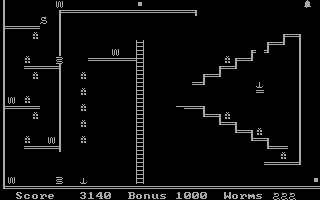
What Willy the Worm deserves respect for is its age and honesty. It's one of the early examples of how one person released a game on their own terms, offered a modification tool, and in doing so effectively anticipated the modding culture. It has aged considerably, of course — graphically, sonically, and in depth. Today it's primarily a historical curiosity, not a gaming experience that will keep you engaged for longer than a few minutes unless you have a connection to that era.
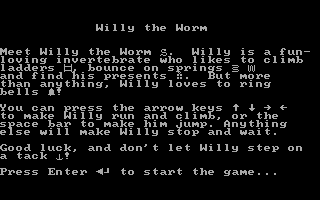
Today Willy the Worm appeals mainly to those who want to see what gaming looked like in the early years of IBM PC-compatible machines. You can run it in a browser through emulators like DOSBox Online without any problems. If you're curious about where the home PC gaming era began — and why even such simple things were a cause for excitement back then — it's ten minutes well spent.
 old


 ▶Bubble Bobble1989MS-DOS / PC


