Этот обзор ещё не переведён — показываем оригинал (English).
All those falling-block puzzle games blur together. This one isn't about falling blocks at all. Tetris Attack on Super Nintendo bears the name of the famous building toy, but it's actually a completely different game — ported from a Japanese arcade and renamed for the Western market. Its real name is Panel de Pon, and it shares only a distant connection with classic Tetris.

You play on a four-by-six grid filled with colored blocks. A cursor you control moves across the playfield, and you swap adjacent tiles. The goal is simple — arrange groups of four identical blocks into a square and they vanish. Each destroyed group triggers chain reactions that cascade from the top of the field. That's where the fun lies — keeping the chains going and the multiplier effects stacking up for you. The game accelerates, blocks fall faster, and suddenly you're thinking three moves ahead to create the maximum impact.
The mechanics are simple, but their depth reveals itself with every moment you play. It's not just about watching things fall — you need to think reflexively about where each tile will land to get the most out of it. The game doesn't teach you gradually; it throws you into the same puzzle right from the start. The controls are precise. On Super Nintendo it works without hesitation, responding to your every move. That's essential at this pace.
In the nineties, Tetris Attack was a phenomenon in Japan, where it was known by its original name. It brought a completely fresh perspective to what a puzzle game could be. While others pretended Tetris was unbeatable, this clever work said — hey, what if we did this completely differently? It arrived in the West later and went almost unnoticed. It's aged beautifully — the visuals remain crisp, the SNES sounds are clean and pleasant. The game truly accelerates to exhausting levels, but that's the point — when you mess up, it's genuinely your fault, not the game's.
Today you can play it in an emulator or one of its many cousins — Nintendo has released countless variants and sequels. If you play the original now, you'll be surprised how fresh it feels. It's not nostalgia — it's simply good design. A game that plays differently from fifty percent of the other puzzle games from that era.
 old




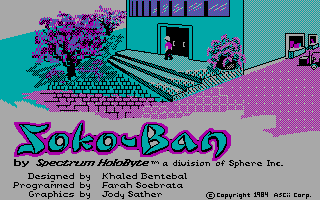 ▶Sokoban1984MS-DOS / PC

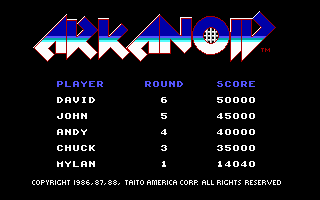 ▶Arkanoid1988MS-DOS / PC
 ▶Boulder Dash III1986ZX Spectrum


 ▶Chess1998Sega Mega Drive
