Этот обзор ещё не переведён — показываем оригинал (English).
It's 1995, Friday afternoon, parents away. I fired up the computer, loaded a floppy disk, and spent the entire weekend shuffling names around in spreadsheets instead of going outside. Player Manager 2 by Anco Software was directly responsible for that.
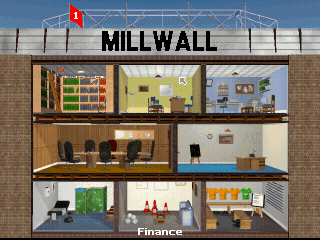
Anco wasn't exactly an unknown name back then — their Kick Off series was practically mandatory for any serious PC gamer. But Player Manager 2 went a different direction. No bird's-eye view of the pitch, no direct player control. Here you sit in the manager's chair of a football club, dealing with transfers, tactics, finances, and team selection. You only see the actual action through text or very simple graphical match results.
The heart of the game is squad management and tactical preparation. You set formations, pick your starting eleven, buy and sell players within a budget that never seems quite generous enough. The interface is clean, reasonably clear by DOS standards, but could use at least one lesson in user-friendliness these days. Some information takes longer to dig up than it should, and the game barely explains anything to you. It just assumes you know what you're doing. Or you'll figure it out as you go.
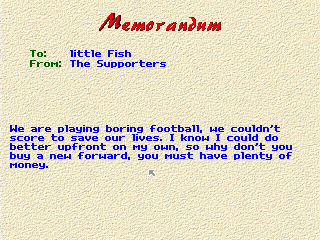
What the game had going for it thirty years ago, it still has today: the core loop of building your club season by season, climbing the leagues, watching players age and their performance drop. That addiction isn't about graphics or sound — that Sound Blaster audio was tolerable back then, today it's more of a curiosity. It's about the numbers and decisions that actually matter. Games like Football Manager do the same thing now with ten times the depth, but Player Manager 2 had all these core tensions together at a time when the PC competition was still figuring out how to approach sports management games at all.
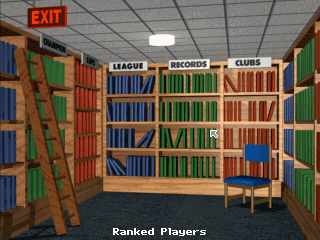
Today it's mainly for those who want to see where this branch of sports management got its start, or who appreciate sparse, text-driven strategy without modern bells and whistles. In-browser emulation makes it accessible without hunting down boot disks, and an hour with it gives you a solid picture of what football management looked like on a computer in the mid-nineties. The nostalgia value is real. But don't expect more than what the game actually delivers.
 old


 ▶Sid Meier's Civilization1991MS-DOS / PC


 ▶Chess1998Sega Mega Drive


