Year 1999. Unreal Tournament was emerging from gaming magazine presses like a revelation — fast, bloody, brutal. And someone at Visionary Media thought: what if we did exactly this for kids with foam projectiles. On paper, Nerf Arena Blast sounds like an advertisement scam. In reality, it's a solidly functional shooter that shows more respect for its target audience than you'd expect.
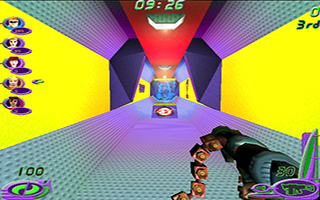
It's a first-person arena shooter set in futuristically-styled halls where instead of weapons you have an arsenal of Nerf — foam rockets, darts, and various launcher variants that actually existed in shops back then. The goal is to progress through a tournament, defeat opponents in various game modes and climb higher. No story, no drama. Just movement, shooting, and score.
The game stands on the same foundation as the popular arena shooters of the time — movement is snappy, maps are spacious and multi-tiered, opponents don't slack off. The weapons have different characteristics, so you'll quickly pick a favorite. The problem is that the Nerf theme ties your hands a bit: projectiles are slow, visible, and very colorful, which helps visually but also makes the whole thing feel less sharp than the inspiration the game draws from. The single-player campaign is decently long and the AI isn't completely dumb, so it won't be a walk in the park.
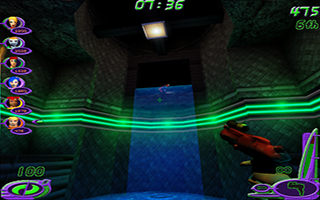
Today we remember it mainly because it actually worked. It wasn't a given that a game created as a licensed product for a toy brand would have sensible controls, acceptable performance, and playable campaign menus. It aged predictably — the graphics are generic, sound design unremarkable, and without that era's nostalgic connection to plastic Nerf guns there isn't much left. Multiplayer is practically unplayable today, the server infrastructure is long gone.
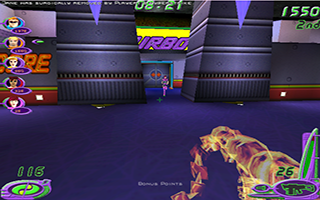
Today it'll be appreciated mainly by nostalgics who collected Nerf guns as kids and want to remember how this combination felt back then. It runs without issues in a browser or through DOSBox, you'll get the controls down in a few minutes. For an hour or two it's pleasant retro — not great, but sincere. And that's something rarely said about licensed games in the nineties.
 old
old


 ▶Doom1993MS-DOS / PC


 ▶Contra1988MS-DOS / PC


