The year is 1991, Spanish studio Dinamic, and a game whose name says it all. Boy. Hammer. Flag. That was enough to keep you glued to the monitor for more hours than you'd care to admit.
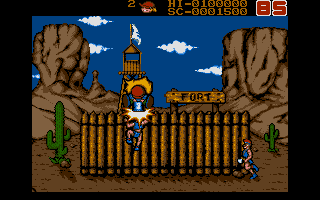
Hammer Boy is an arcade game in the purest sense of the word. No story, no cutscenes, no moral dilemmas. You stand on a tower, a flag behind your back, and enemies swarm in from all sides with one goal — to steal that flag. Your tool is a hammer and your job is to stop them. Each wave has a time limit, then the next one comes. Score goes up, difficulty goes up too.
The controls are simple to the point of being spartan, which in 1991 wasn't a criticism. You move around the platform, swing your hammer, and try to figure out which direction the greatest threat is coming from. The game doesn't hold your hand. Mistakes are punished immediately and without mercy. Dinamic knew this kind of arcade directness — after all, the studio was behind a string of Spanish gems for 8-bit systems, and the transition to PC wasn't just a port for them, but a deliberate escalation of pace.
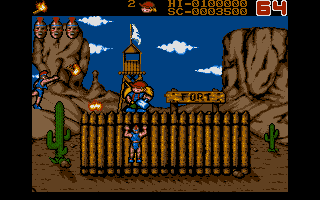
What has aged well: that basic rhythm where you tell yourself "one more time" and suddenly it's midnight. What hasn't aged as well: the visuals are modest even by 1991 standards, and the sound design doesn't quite save it. Hammer Boy was never meant to be a technical showcase. It was pure design — minimal resources, maximum replayability. In that way, it's similar to things indie developers deliberately sell today for twice the price.
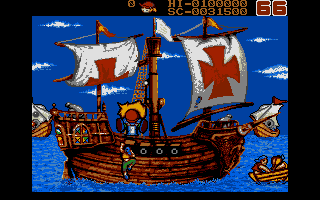
Today Hammer Boy appeals mainly to those who love arcades without the sauce. No saving, no checkpoints, just reflexes and patience. In the browser via DOSBox it runs without installation and without hunting through drawers for old floppy disks. Five minutes is enough to tell if it'll hook you. It hooked me — in the nineties for whole afternoons, nowadays for shorter but no less intense bursts of nostalgia.
 old
old


 ▶Doom1993MS-DOS / PC


 ▶Ultimate Mortal Kombat 31996Super Nintendo


