Ce test n’est pas encore traduit — nous affichons la version originale (English).
The demon lord has invaded your lands, and you're standing in a tavern somewhere deciding whether to hire a knight or a mage. Disciples: Sacred Lands is a turn-based strategy game from 1999 that borrowed heavily from Heroes of Might and Magic but somehow carved out its own grim corner of the dungeon. Strategy First, a Canadian outfit, threw this together during the golden age when every publisher thought they could make the next legendary tactics game. They were mostly wrong, but Disciples had something—a darker palette, slower pacing, and a willingness to let you sit and think.
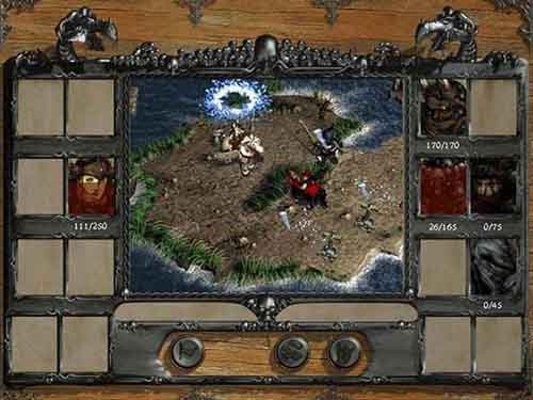
You command small stacks of units across an overhead grid, moving around a medieval fantasy world collecting gold and experience. The setup is standard: recruit heroes, build up your army, conquer castles, deal with demons. Each turn you get a certain number of movement points and action points. Combat happens when you bump into an enemy stack, and here the game slows to a crawl—you place your units on a small tactical battlefield and watch them slog through turn-based combat that feels less like a chess match and more like watching two groups argue about whose turn it is. The magic system exists but feels ornamental; most battles boil down to who brought more meat shields.
Mechanically, Disciples is competent but sluggish. Moving stacks across the map takes forever because the game won't let you forget you're playing on a grid. Unit variety is decent—you've got your standard fantasy roster—but the AI doesn't give you much fight beyond outnumbering you. The campaign missions have some story to them, though nothing that would make you pause the game to tell a friend about it. The real friction comes from the pacing: everything moves at the speed of molasses in January, from unit movement to spell animations to the simple act of building something in your castle.
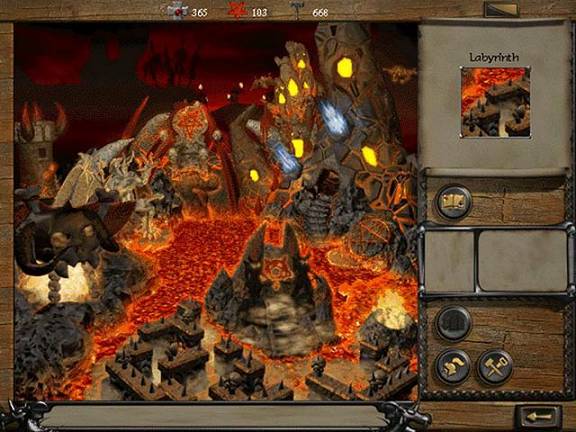
By 2000, Heroes of Might and Magic III had already shown everyone what this formula could do when it was actually refined. Disciples came out in its shadow and never quite caught up. The graphics are serviceable—muted colors, functional sprites, a strong gothic tone that holds up better than you'd expect. But the game demands patience in a way that feels more like punishment than atmosphere. It was never a classic, and time hasn't been kind to its pacing issues.

If you remember the late nineties and want to dip into a tactics game that feels different from the HoMM machine, Disciples is still playable through emulation or DOS boxes. It's not going to blow your mind, but it has its own stubborn charm. There's something almost respectably weird about a strategy game that's content to be slightly slower and slightly darker than its competitors, even if it never quite justifies that choice with brilliant design. It's a game for a specific itch—the one where you want turn-based tactics but don't want to think too hard about what you're doing.
 old

 T-shirt World of Warcraft Dragonflight grisVoir sur eBay »
 Action Figure Archilon Shadowheart - World of Warcraft DCVoir sur eBay »


 ▶Chess1998Sega Mega Drive


 ▶Big Business1990MS-DOS / PC


