این نقد هنوز ترجمه نشده است — متن اصلی (English) را نشان میدهیم.
One shot and you're done. That's the covenant Ice made with Starfighters on the ZX Spectrum in 1986—a horizontal shoot-em-up where mercy is not in the design document. You sit in the cockpit of a starfighter, the screen scrolls relentlessly rightward, and everything that moves wants you dead. There's no health bar, no shields that blink back online, no second chances wrapped in a game-over screen. One bullet finds you and it's back to the start, learning the same ten seconds all over again.

The premise is threadbare by design. Enemy formations scroll toward you in patterns that repeat, growing only slightly meaner with each loop. Your fighter sits center-screen, moving up and down across a narrow corridor, firing at everything that breathes. Ice didn't waste memory on story or texture—they poured it all into the thing that matters: getting you to shoot faster and dodge tighter than the last time you died.
What kills you isn't cheap AI or hidden bullshit. It's rhythm. Starfighters moves at a cadence, and if you're not in step with it, you eat lead. The screen doesn't wait for you to think. Neither does your reflexes, not after you've played for three minutes and your hands remember where the next wave comes from. The Spectrum's limited color palette—those primary reds and yellows against black—becomes almost meditative once you stop fighting the hardware and just accept it as a metronome. Tap, tap, tap. Shoot. Dodge. Repeat. The controls are raw but responsive, which is all a game like this can ask for.

By 1986, shoot-em-ups had already evolved past this—arcades were drowning in bullets, consoles were flexing their color. Starfighters ignored that entirely. It's a conversation between your hand and the screen, nothing more. No filler, no padding. The victory is short because there's nothing to do but play until you run out of lives, and the defeat stings because you know exactly whose finger pulled the trigger on that fatal mistake.

It hasn't aged into nostalgia—it's aged into pure function. If you want to understand why people spent afternoons hammering a 48K computer, Starfighters is the answer. It's brutal, it's fair, and it asks only that you get better at dying less. The kind of game that modern design would smooth into submission; here it just sits, cold and exact, waiting for you to catch up.
 old

 ▶Tanks1983ZX Spectrum
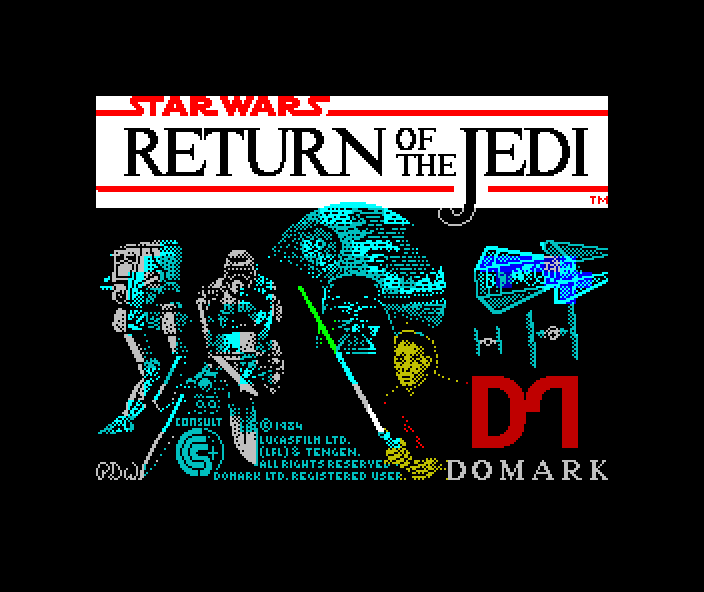 ▶Star Wars III - Return of the JediZX Spectrum

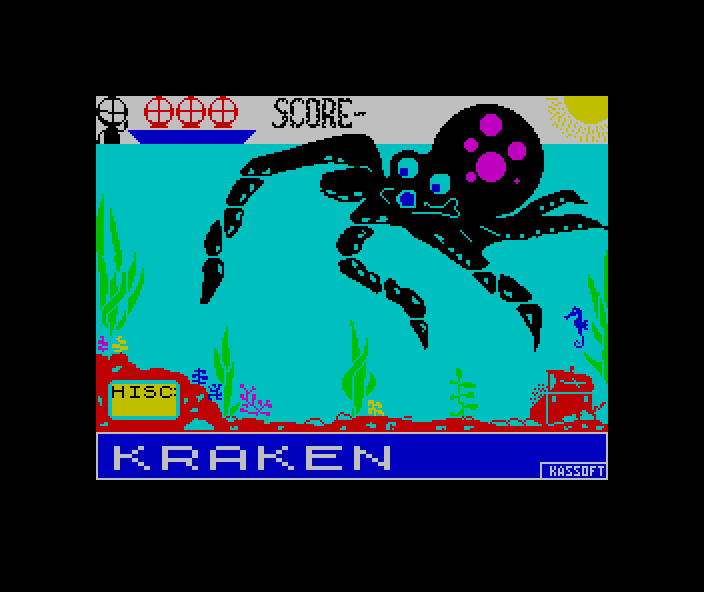 ▶KrakenZX Spectrum
 ▶3D Star Wars1983ZX Spectrum
 ▶Alien Kill1994ZX Spectrum
 ▶The Way of the Exploding Fist1985ZX Spectrum

 ▶Silkworm1989ZX Spectrum
 ▶Babaliba1984ZX Spectrum
 ▶The War of the Worlds1984ZX Spectrum


 ▶Doom1993MS-DOS / PC


