این نقد هنوز ترجمه نشده است — متن اصلی (English) را نشان میدهیم.
I remember that moment precisely. I started Star Control II for the first time because of the ship combat — just like the first one. I loaded the disks, navigated to the arena, and expected to spend half an hour maneuvering and firing plasma shots. But this time I actually left that arena mode. And then I didn't leave my computer until past two in the morning.
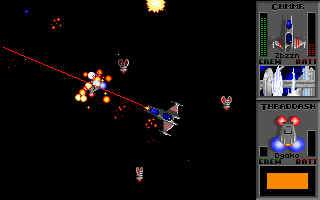
Star Control II from 1992 by Toys for Bob is, on paper, a science-fiction adventure with an open universe. In practice, it's something the genre didn't have a name for back then. The player assumes command of a starship trapped in the Solar System, gradually builds a fleet, makes contact with alien races, and tries to understand what actually happened to the world. The story framework is solid, but the real backbone of the game is the dialogue with aliens — each race has its own voice, humor, and tragedy, and their characters are written so well that I remember them better to this day than characters from many later "epic" RPGs.
Gameplay rests on three pillars. Exploring star systems and mining resources on planets — routine, but necessary. Diplomatic conversations, which are actually excellently written branching scenes. And finally, real-time ship combat, a direct continuation from the first game, where each vessel has different properties and flight physics behaves Newtonian. The combat has depth, but the game doesn't push you toward it so aggressively that it overshadows everything else. Planet exploration has aged the worst — repeating surfaces and a slow landing vehicle are genuinely annoying nowadays.
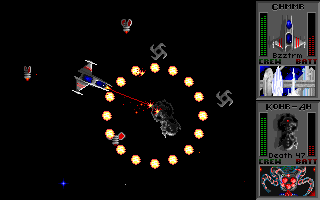
What Star Control II brought was exceptional for its time. An open universe without handholding, a story told through the personalities of alien races instead of cutscenes, humor that wasn't cringe, and the sense that the universe exists even without you. Toys for Bob packed so much content into 1992 that it simply didn't fit into any category. The game didn't become a cult classic by accident — it earned that status by doing this while everyone else was making shooters.
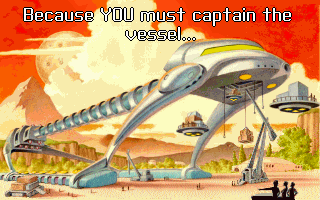
Today it's available as The Ur-Quan Masters, a fan-made open-source port that runs on modern systems without an emulator. If you enjoy space opera, well-written characters, and a bit of old-school patience with exploration, it's a must-visit. Just expect to feel a bit lost in the first hour — the game explains nothing to you, and the manual back then wasn't a shelf ornament but a necessity. Anyone who pushes through gets one of the best games the MS-DOS era ever produced.
 old
old


 ▶Amazing Spider-Man1989MS-DOS / PC