این نقد هنوز ترجمه نشده است — متن اصلی (English) را نشان میدهیم.
Year 1989, the monitor glows in the darkness, and I'm sitting over a map of a fractured ancient China, trying to understand what the game actually wants from me. Romance of the Three Kingdoms by KOEI was nothing we were used to back then. No Tank or Commander Keen — here it was about unifying an empire.
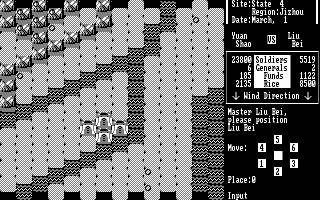
The game is based on the classic Chinese novel about the period of the Three Kingdoms, a historically inspired chaos from the turn of the Han dynasty sometime around the turn of the 2nd and 3rd centuries AD. The player chooses one of the period's rulers, takes control of their territory, and tries to defeat the others diplomatically, militarily, and economically to unify China under a single flag. KOEI took it seriously — this theme wasn't just window dressing, it was the backbone of the entire game.
The mechanics are turn-based and systemic. Each round you distribute orders among generals, manage agriculture, supplies, population loyalty, diplomacy, and military campaigns. At first glance it looks clear, the menus are simple and the controls are text-based. But beneath that lies a layered interplay of variables that, after your first defeat, makes you reconsider every decision from twenty turns back. The game doesn't seem complex — and then suddenly you lose a province because you underestimated the floods.
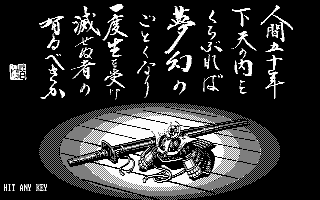
Back then this was something extraordinary. KOEI blazed its own trail: no quick action, no concessions to casual players. The Japanese company built a reputation in Europe as a creator of demanding historical strategies, and Romance of the Three Kingdoms was one of the founding stones of that reputation. The series then continued throughout the nineties and is still being released today. What's aged? The interface is spartan to the point of ascetic, the pace is slow, and back then you couldn't get anywhere without a manual. Part of that magic today might come from the feeling that you're playing something that was five years ahead of its time.
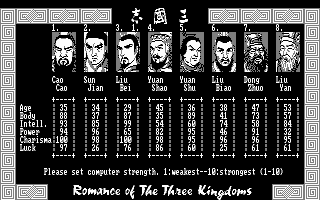
Who will enjoy it today? Anyone who loves strategies where the outcome is decided in the silence of spreadsheets rather than in real time. If you enjoy Crusader Kings for its systemic nature and relationship complexity, this is the ancestor of the same kind of thinking — simpler on the surface, but with similar depth beneath it. Play it in your browser as a historical artifact that's only now learning how to age.
 old


 ▶Sid Meier's Civilization1991MS-DOS / PC


 ▶Chess1998Sega Mega Drive


