Year 1997, the gaming market flooded with fighting games trying to grab a slice of the pie that Mortal Kombat had baked. Most of them faded into obscurity before they even got properly installed on your hard drive. Theatre of Pain from British studio Mirage Technologies was one of those titles I tried back then out of sheer curiosity — and largely because I played pretty much anything that had even a hint of brutality in its name.
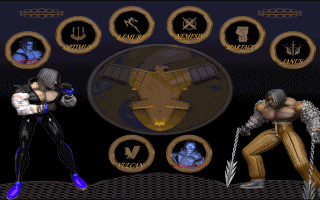
It's a classic 2D fighting game with digitized characters, the same visual approach that made the original Mortal Kombat famous. Gothic atmosphere, dark arenas, characters dressed in leather and steel — the game doesn't even try to hide where it drew its inspiration. The setting is vaguely fantasy-horror, without any deeper story background worth mentioning.
Mechanically, Theatre of Pain works the way you'd expect from the genre back then: basic kicks, punches, special moves performed through direction and button combinations. The controls respond, but not with much precision — there's a noticeable gap between intent and what you see on screen. Characters move somewhat sluggishly, and the fights lack that sharp feedback that made Mortal Kombat satisfying even on arcade cabinets. There's a decent roster of playable characters, each with their own set of special attacks, but their distinction blurs faster than you'd expect.
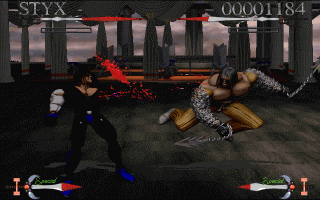
What the game mainly sold back then was its visuals — digitized actors in real costumes, blood, flashy finishing moves. On a monitor hooked up to a Sound Blaster card, it looked acceptable. The problem was there wasn't much underneath. Mortal Kombat had, beyond the gore, a solid engine and a clear character hierarchy. Theatre of Pain lacked that second layer, and it showed especially in the single-player campaign, which started repeating itself after a few matches in a way that didn't sound like praise even in 1997.
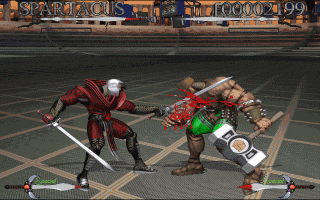
Today Theatre of Pain appeals mainly to those who want to map out the genre's dead ends — a title that shows how a fighting game can nail the period aesthetic and still miss the point. For nostalgia-driven players who remember it from their own experience, it's a pleasant trip. For everyone else, it's more of an interesting artifact than a living game. Still, if you've got a free afternoon and a taste for historical curiosities from the days when every British studio believed they could beat Midway — Theatre of Pain deserves an hour of your attention. Just don't extend that hour.
 old
old


 ▶Doom1993MS-DOS / PC

 ▶Contra1988MS-DOS / PC


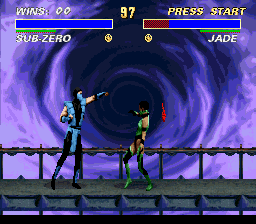 ▶Ultimate Mortal Kombat 31996Super Nintendo

