Этот обзор ещё не переведён — показываем оригинал (English).
When DOS wasn't keeping its mouth shut, things like Grammarama were born — an educational game that decided English needed more than just a textbook. Year 1991, a time when interactive tutorials were still pretty rare and most corporate software looked like paper tedium with sound.
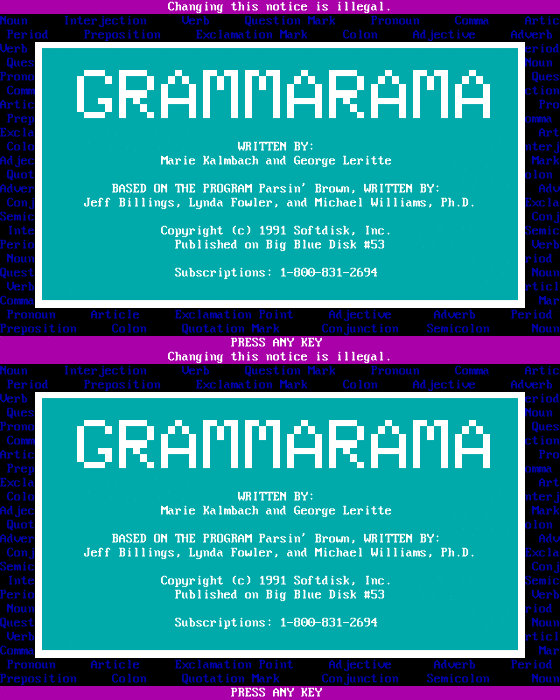
It's a language trainer focused on English — specifically grammar that would await a high school student. The game packs quizzes, exercises, and mini-games that try to bring learning back to reality instead of having you just copy sentences from a notebook. Words, sentences, missing parts of phrases flash across the screen — all in direct form, without any attempt to dress it up.
Playing is simple: you read the instruction, click the right answer, or type in a missing word. No pressure, no dramatic bouncing characters — pure functionality. The graphics are "good enough to see," the music you've had stuck in your head for a week. The pace is reasonable, no unnecessary waiting, and when you make a mistake, it tells you straight up without coddling you.
These kinds of things are remembered precisely because they're not as important as shooters or adventures, yet they formed the backbone of home PCs in the nineties. There were girls and boys whose parents made them run Grammarama, and they were surprised it wasn't the worst way to get into English at all. Nobody raved about it, but nobody forgot it either.
Today it'll suit someone for whom textbooks take too long and who wants to slip back for a while to when education wasn't played, it just was. For anyone who knows DOS and English, it's a smooth ride — without pretension and without the illusion that a game changes the world. It simply does what it promised, and it doesn't get in your way.
 old