Этот обзор ещё не переведён — показываем оригинал (English).
I drew a row of penalties on paper to remember which one I'd already watched. Football management games from the early nineties all looked the same—table, menu, numbers. Goal II tried to be more, which made it less.
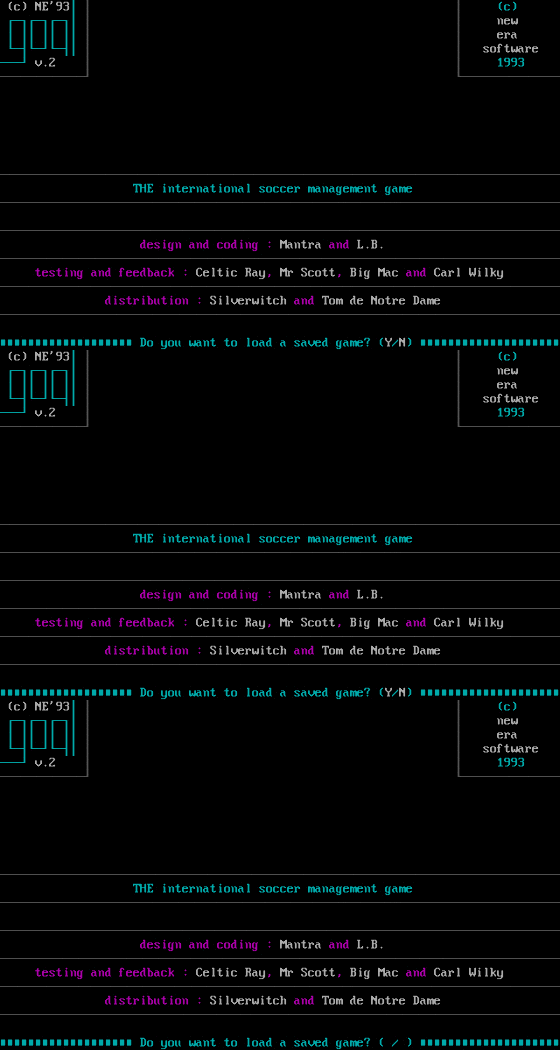
It's a football management simulator where you're owner and coach at once. Your task: buy players within budget, train them, set formations, and watch how they perform on the pitch. The game is from a time when digital football wasn't about 3D animations, but about numbers converted into graphics like chessboards. Tournament, cup, league season—everything fits in a few kilobytes.
The mechanic is straightforward: open menu, pick players, set formation, and watch the match unfold—usually as a series of messages and a list of shots, saves, and goals. Real-time play doesn't exist, just an abstract sense of how individuals fare in tables. Graphics is more decoration—what matters is what happens in the data files. Controls work without complications, it's just not particularly entertaining to watch numbers turn into numbers. Strategy is there, but comfort isn't.
Historically Goal II belongs to the moment when computer football was still finding its face. While Championship Manager in Britain was already building fan dynasties, these games hung in Czech player rooms like posters—everyone knew they existed, hardly anyone played them to completion. It aged hard because numbers without story and without visuals become a tax form after a while.
Today only someone missing nostalgia for the earliest computer football would play it. It's not badly made, it's just shallow—without deeper strategy and without entertaining content to catch you. When you compare it to Championship Manager from the same time, the stamp is clear: Goal II was the alternative for those who couldn't afford the original or couldn't find it anywhere.
 old


 ▶European Club Soccer1993Sega Mega Drive

 ▶The Manager1991MS-DOS / PC


 ▶NHL '941993MS-DOS / PC


